Idiot Hill
Roger Tofte thought Enchanted Forest would take two years to build. It took seven. His coworkers called it Idiot Hill. Fifty-five years later, I took my children there and found myself wondering not just how it was built, but whether a place like it could ever be built again.
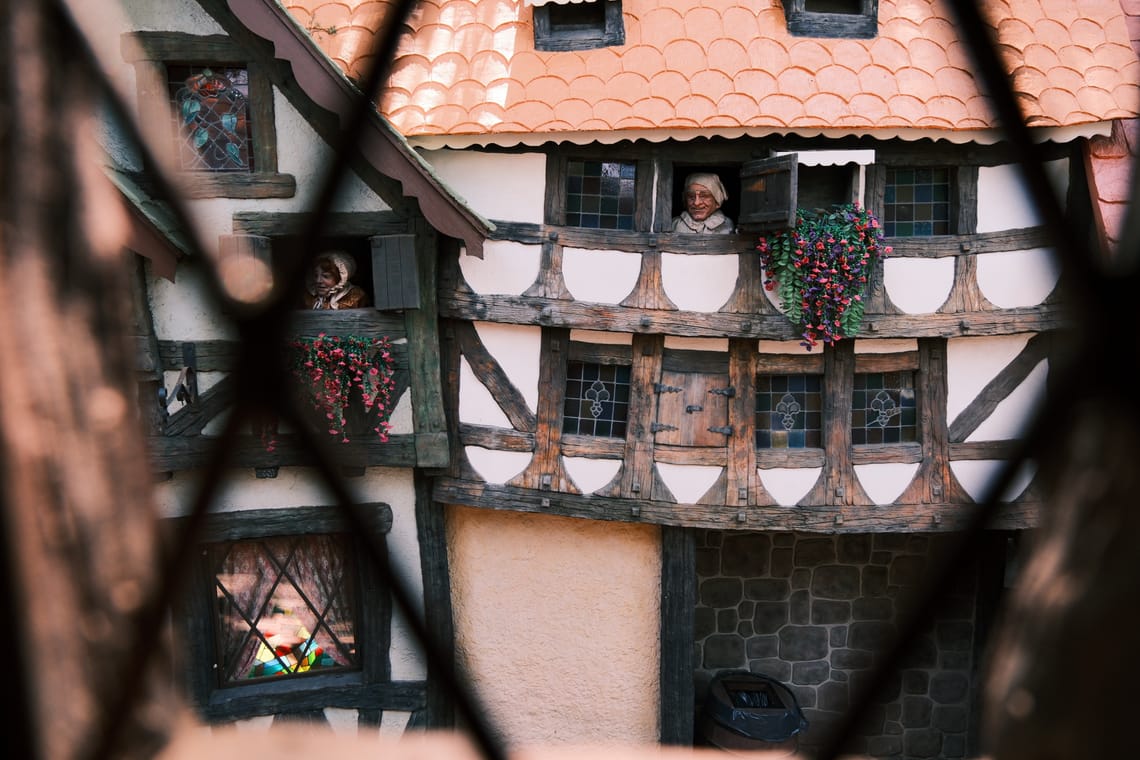
We took the kids to Enchanted Forest this week, a theme park that sits just off I-5 south of Salem, Oregon, hidden on a wooded hillside except for a castle-shaped sign near the freeway.
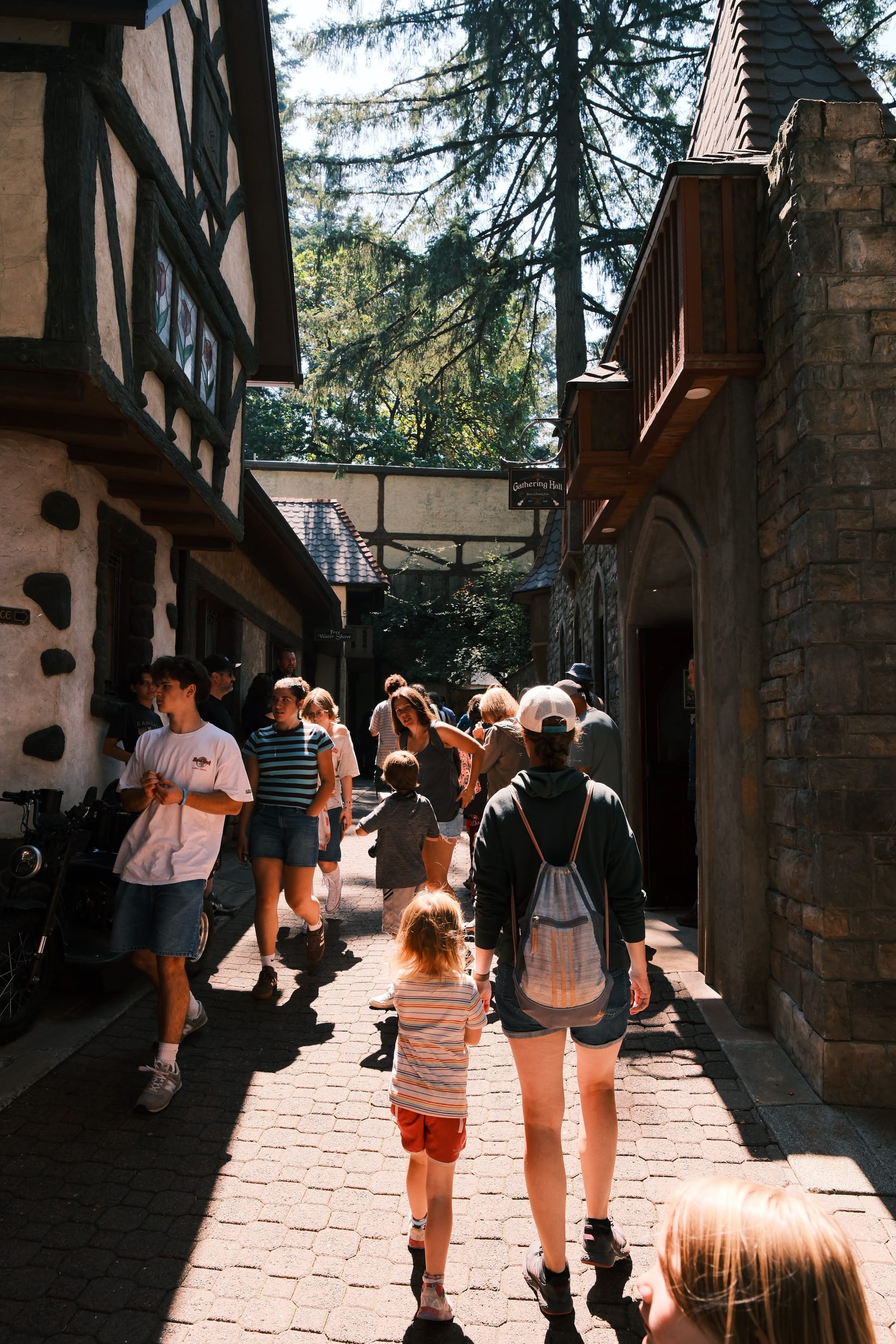
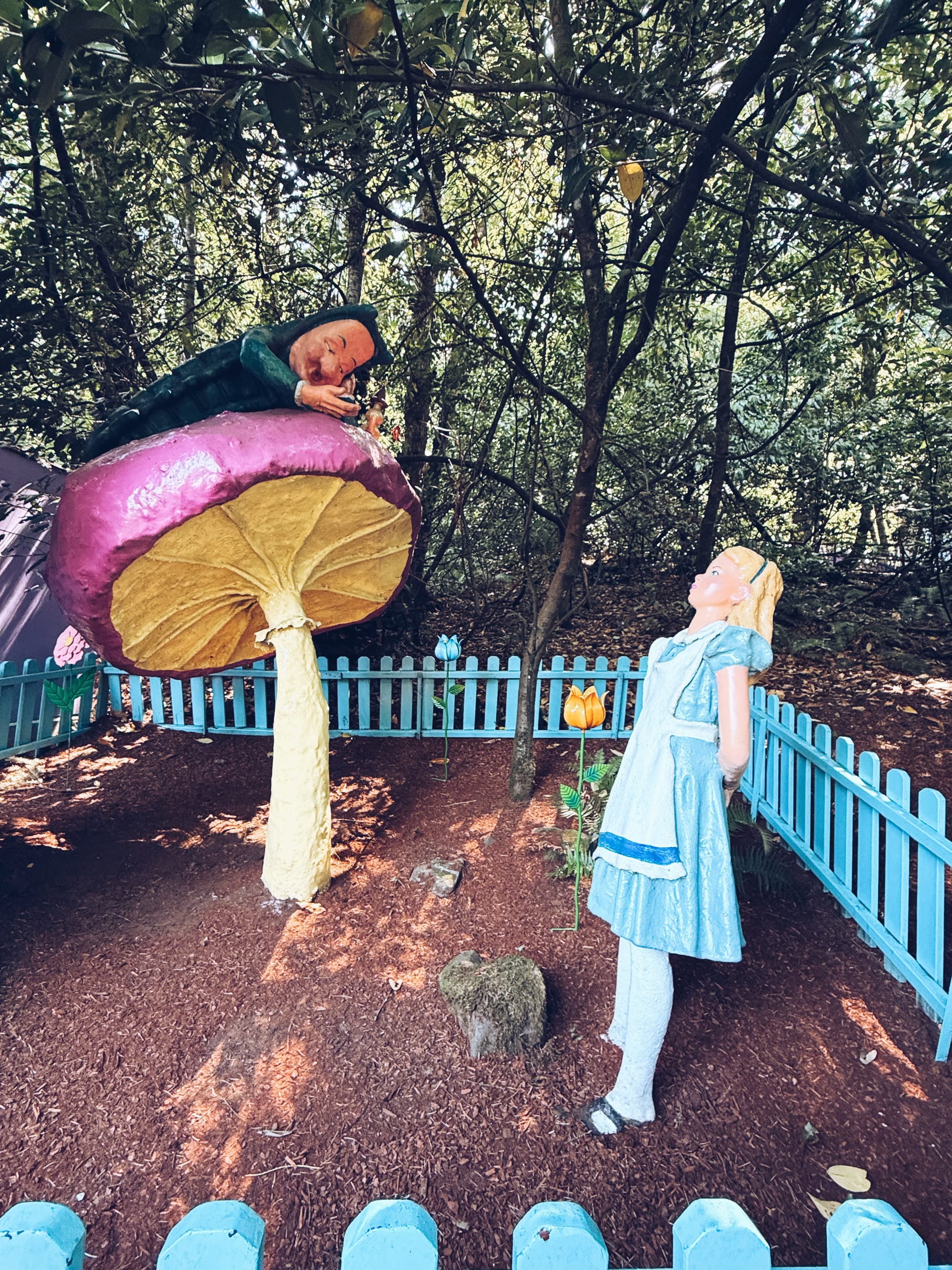
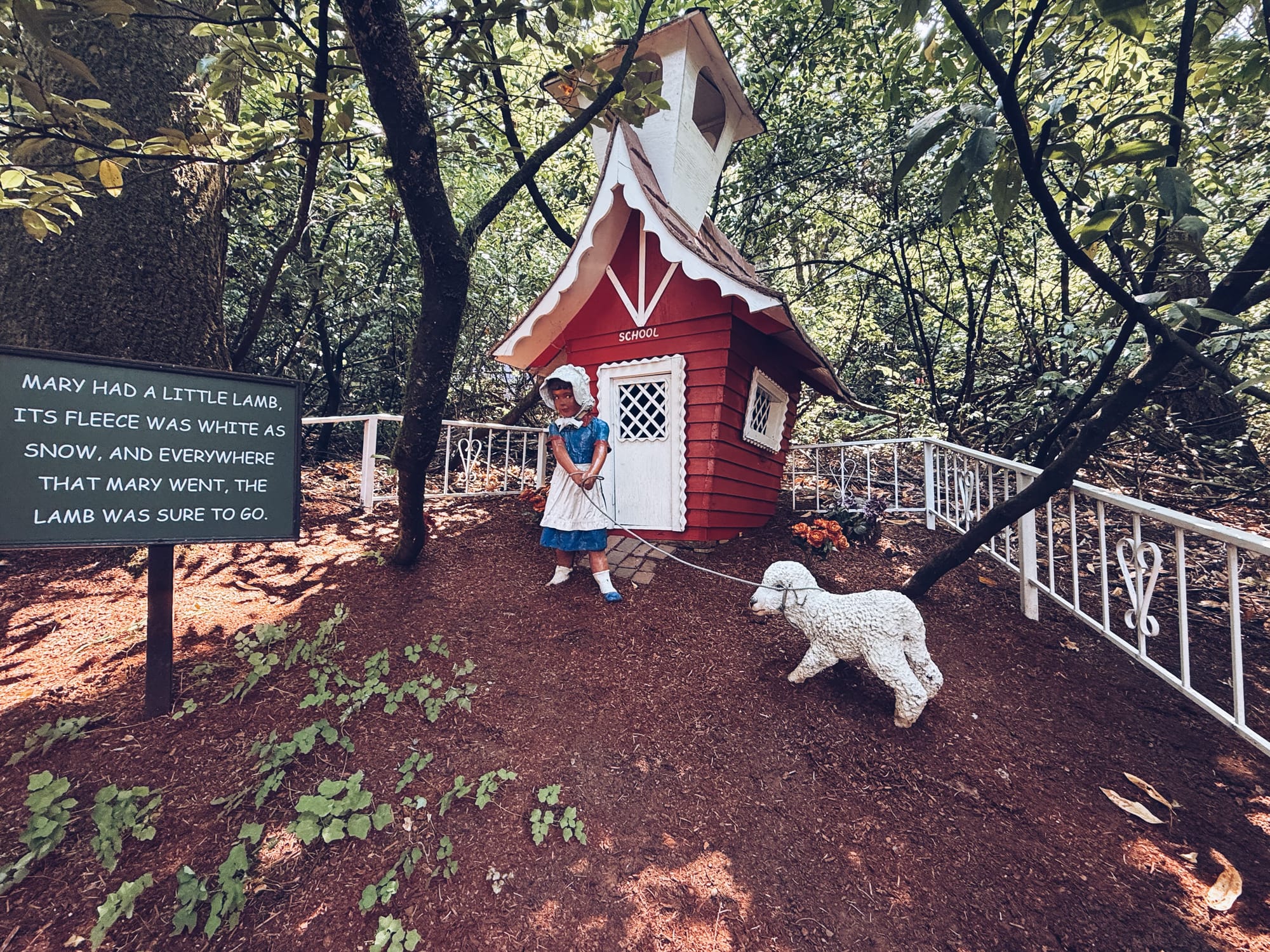
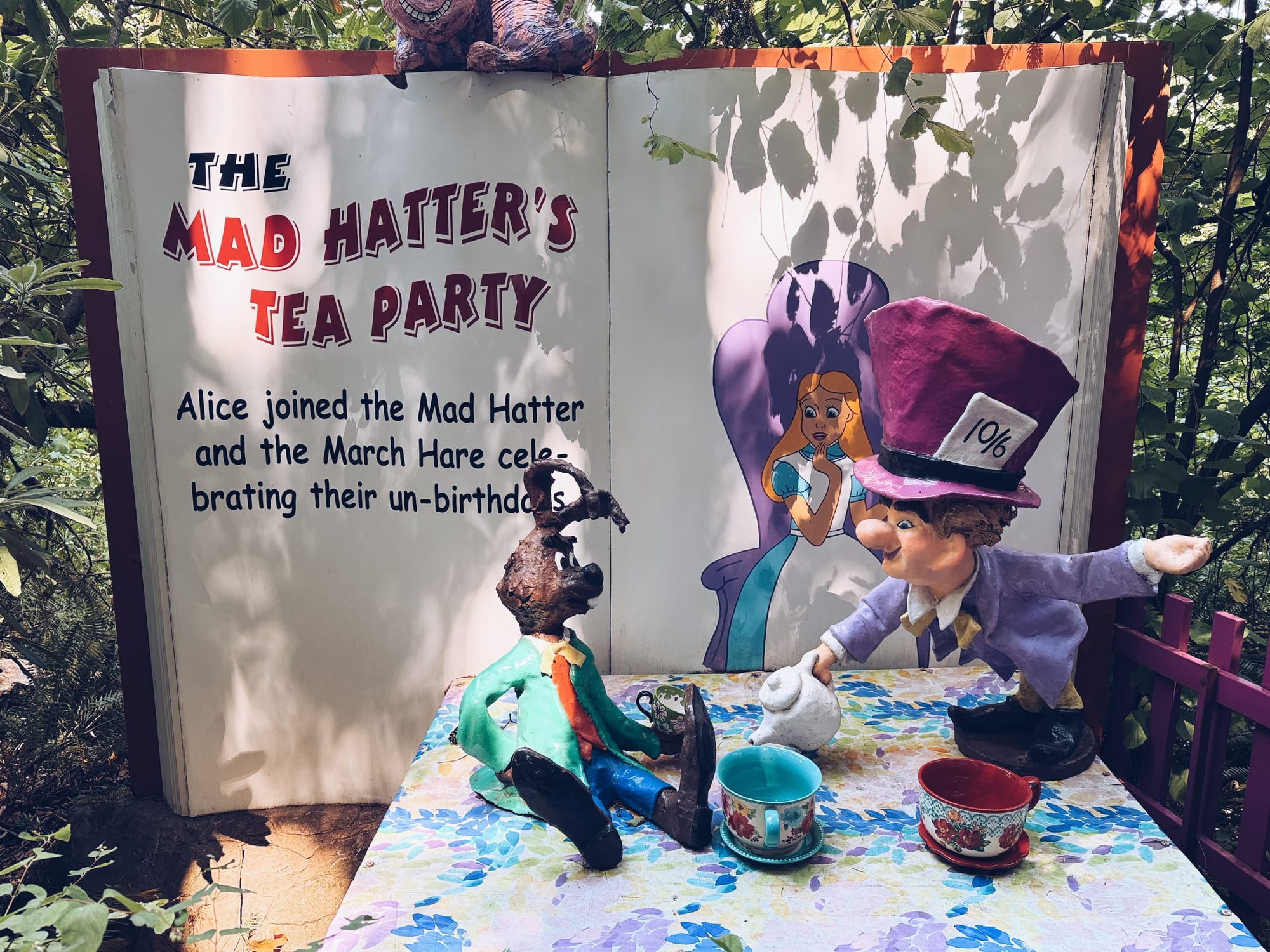
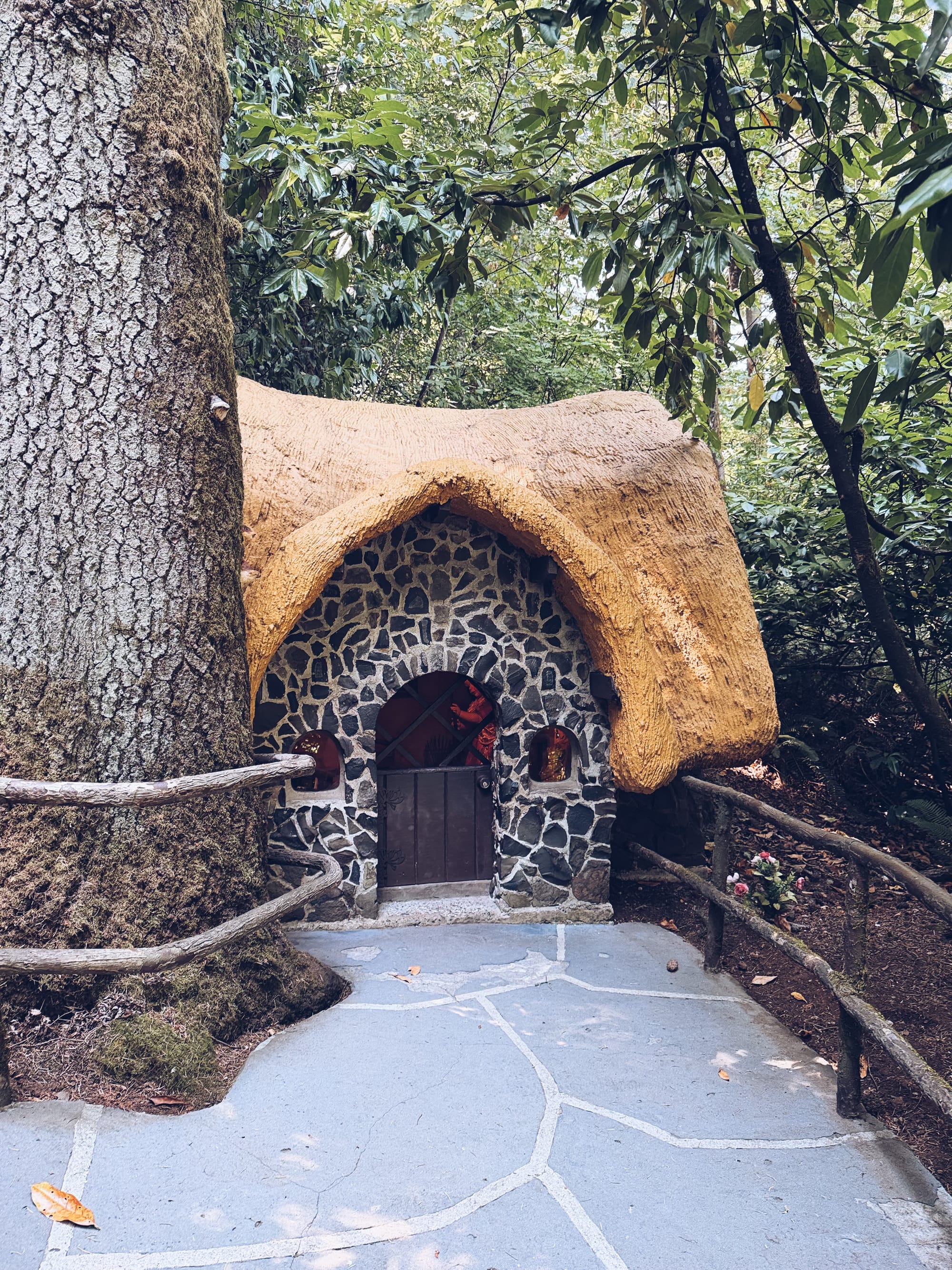
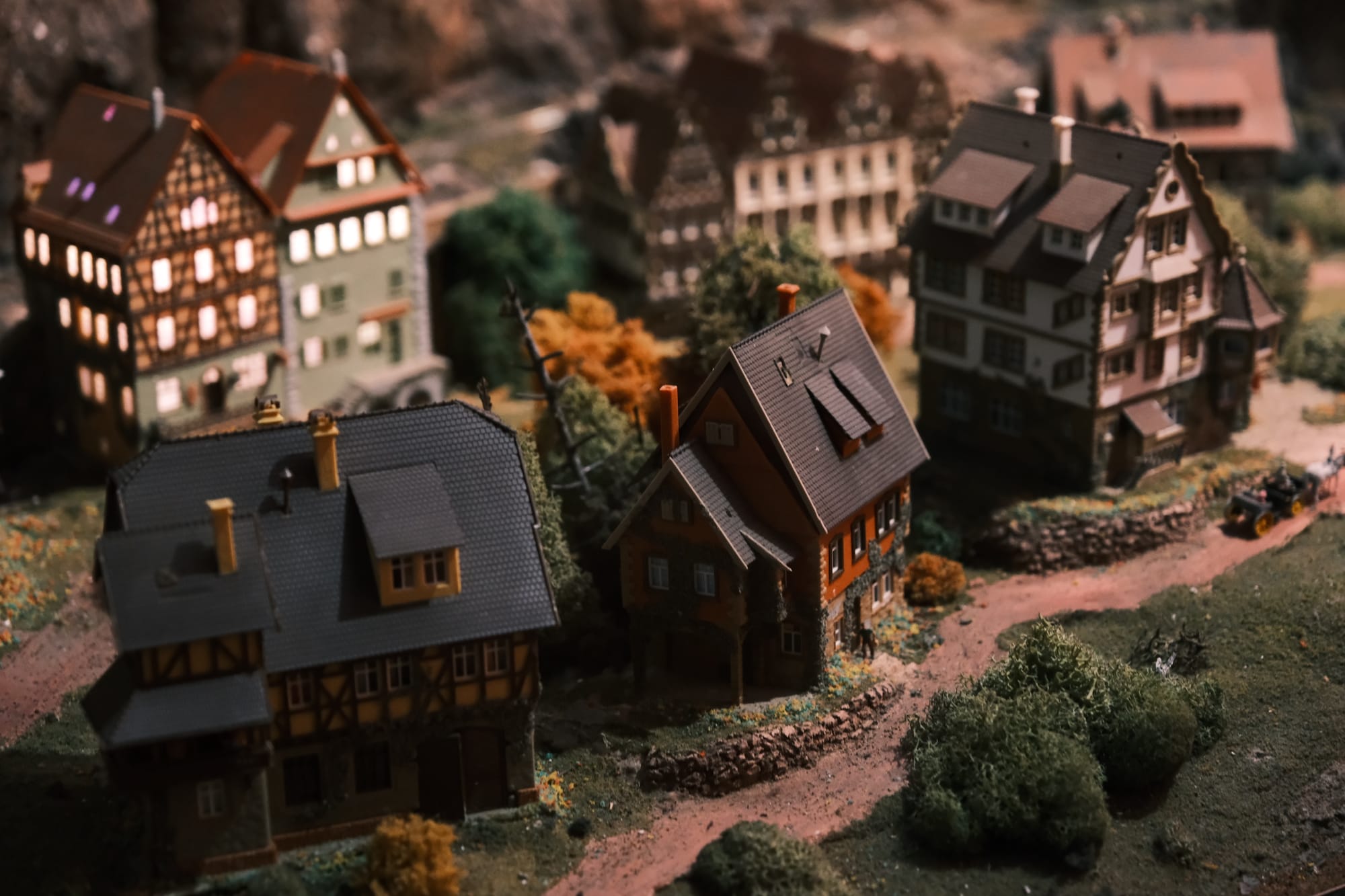
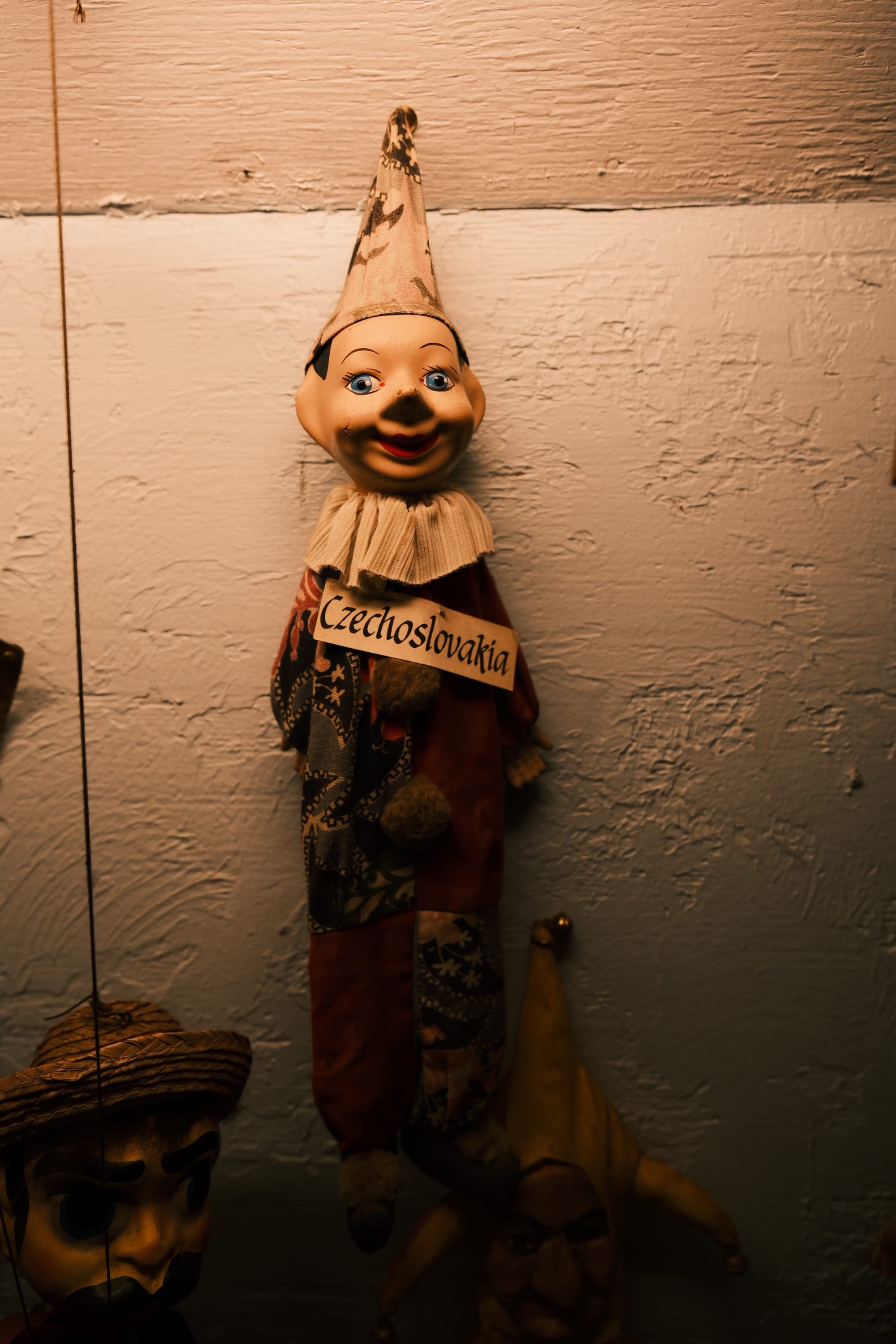
We had not been there in two years. My daughter was old enough this time to follow what was happening, or at least to understand that something was happening. My son vaguely remembered parts of the park from our last visit, but was trying to act like parts of it didn't freak him out a little before, now that he's older.
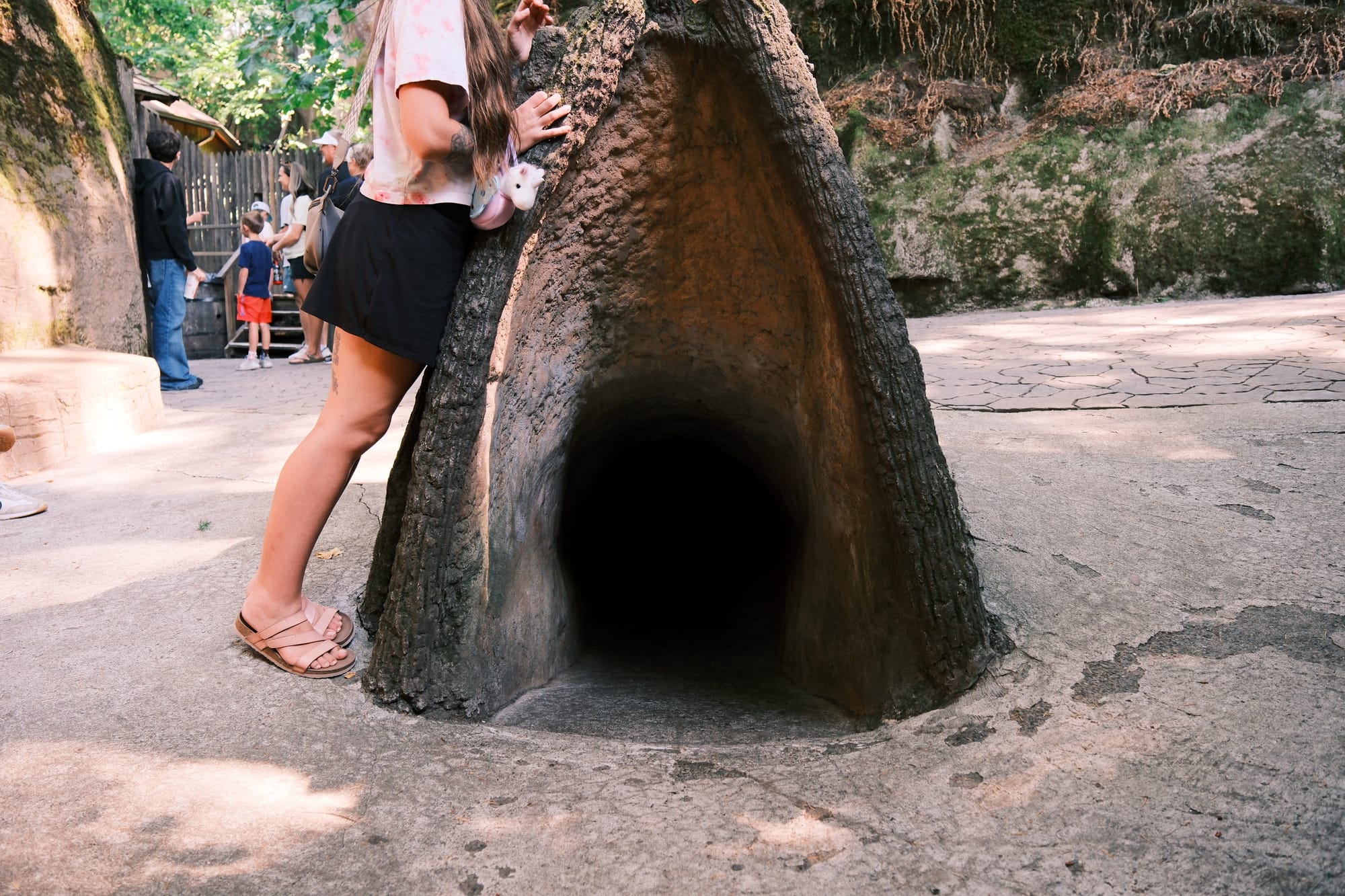
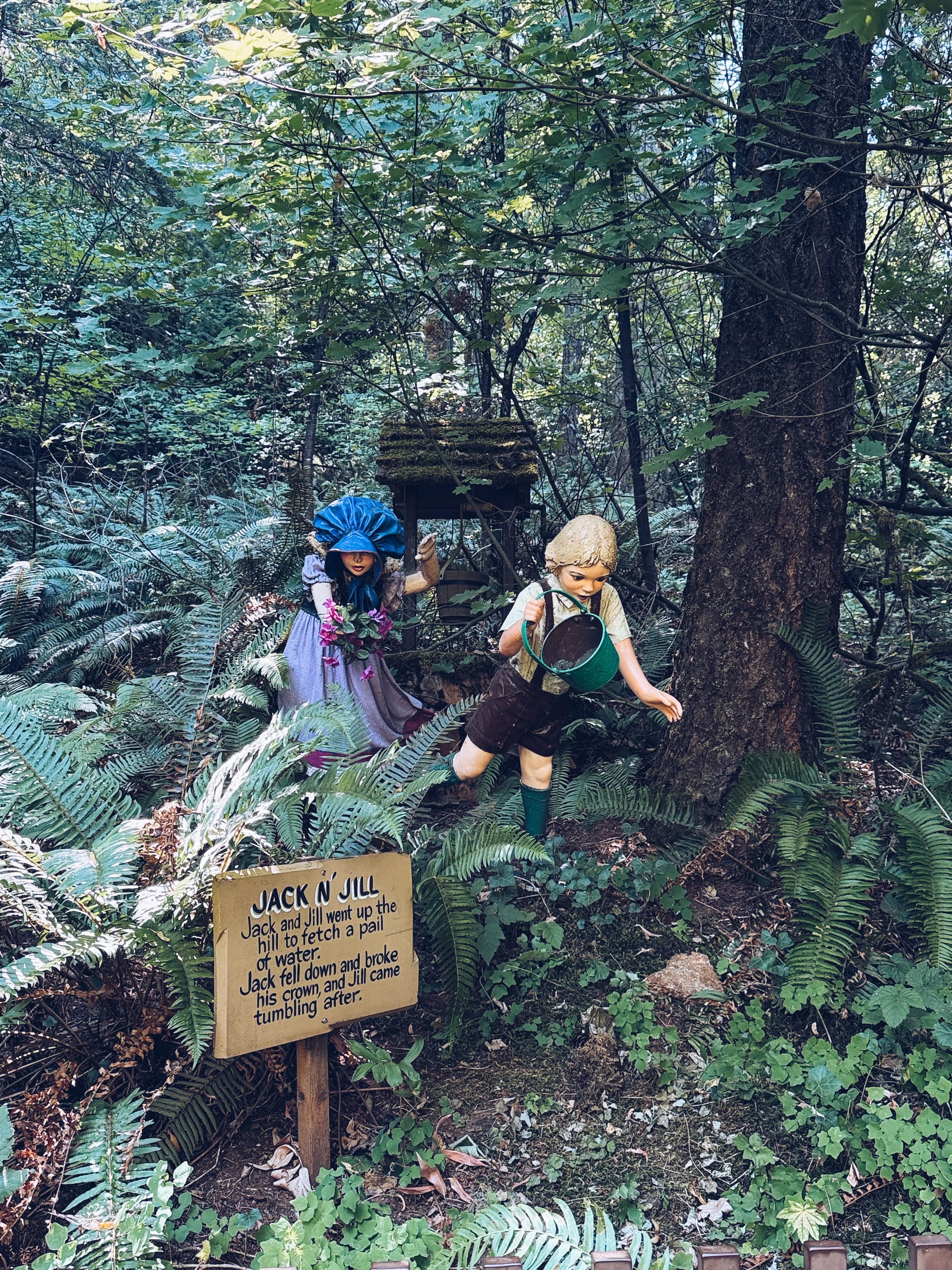
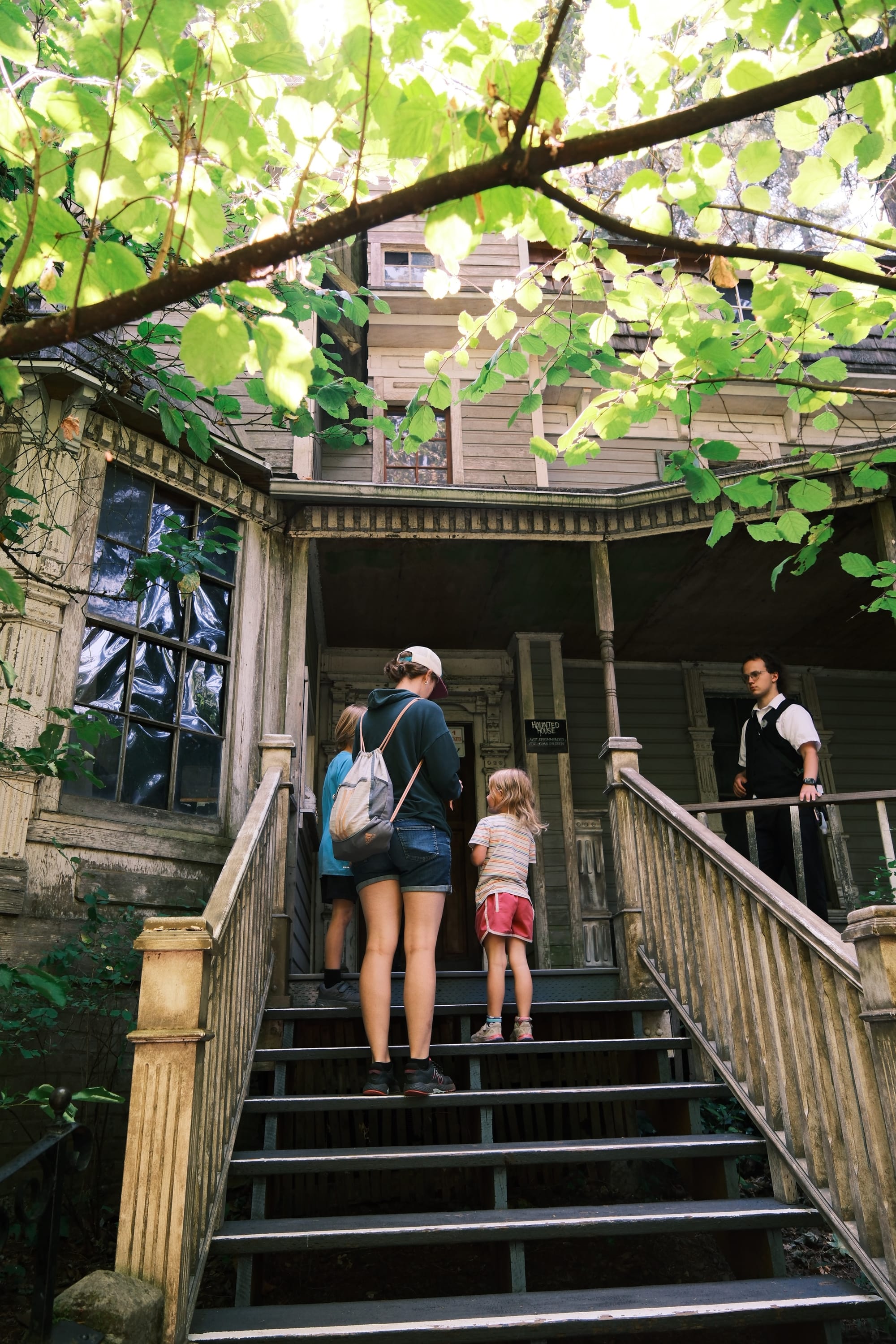
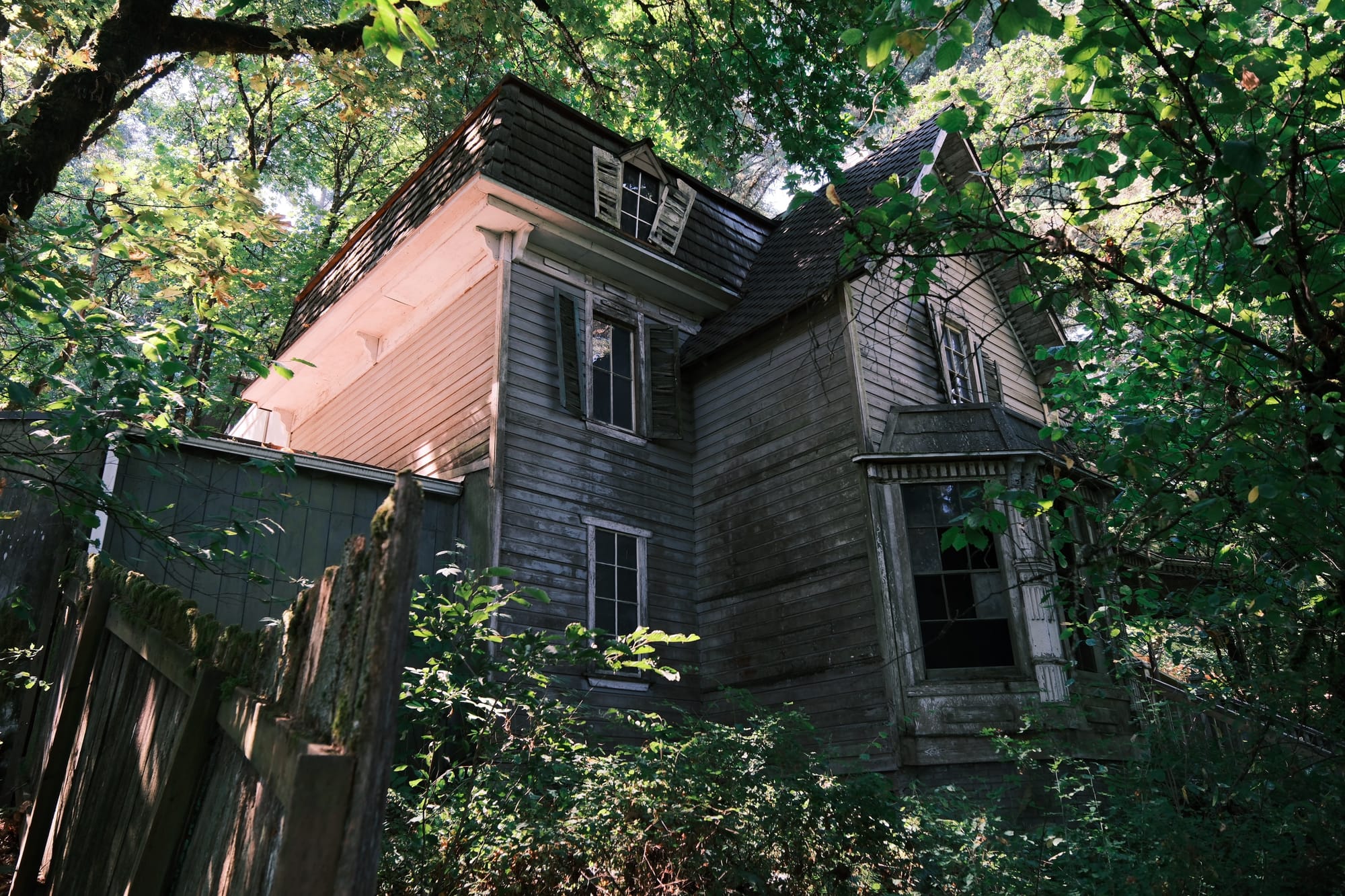
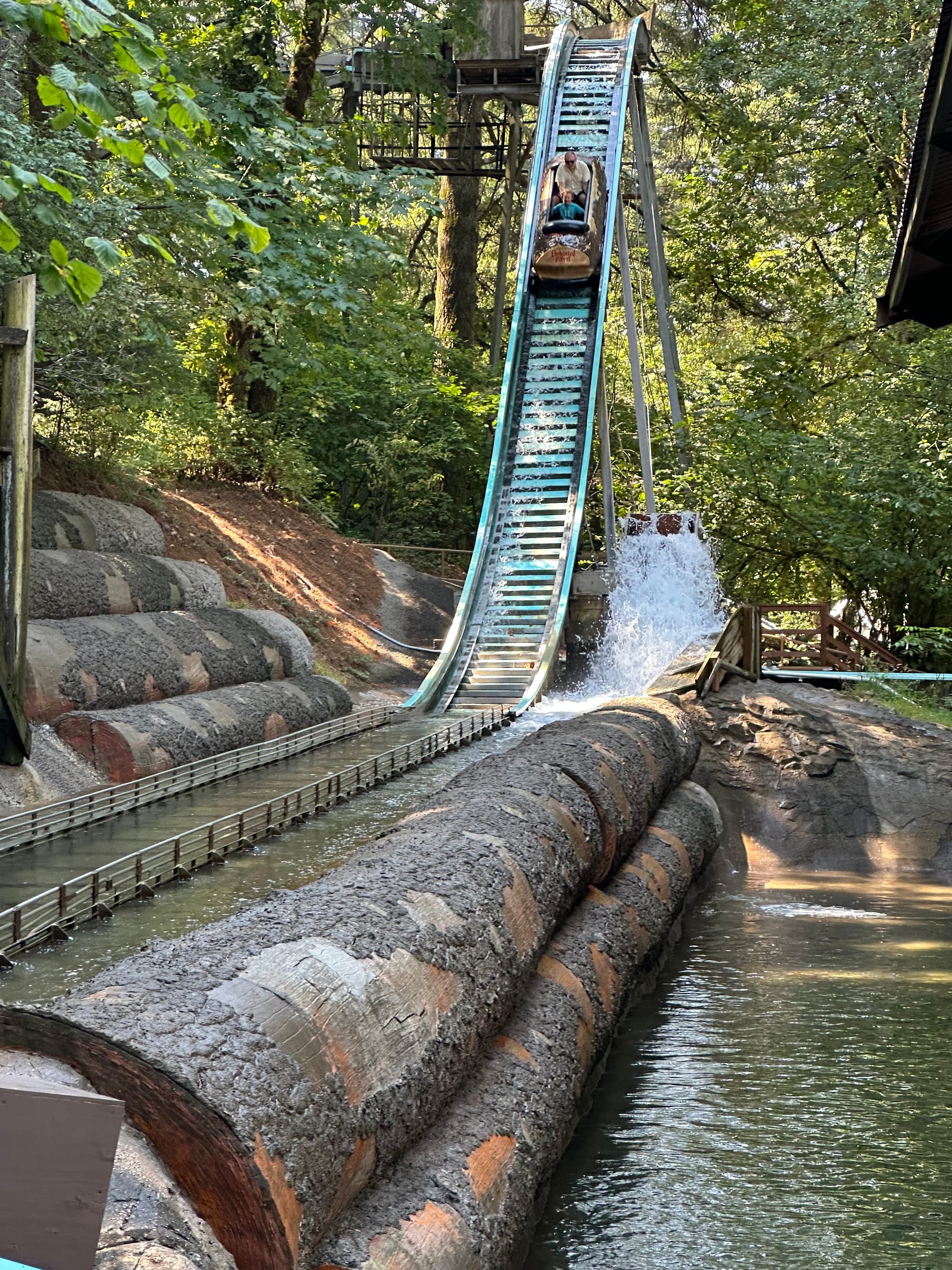
Enchanted Forest is not large. The whole property is twenty acres, much of it steep enough that I got winded on the initial ascent after entering the gates. Within those twenty acres, however, Roger Tofte (its creator) managed to fit several centuries, a number of fairy tales, an Old West town, an English village, a haunted house, a log flume and a roller coaster called Ice Mountain. It would appear the park has never been overly concerned with the border between homage and theft. Alice in Wonderland makes an appearance, as do Snow White's seven dwarfs, albeit under names that have clearly been advised not to discuss their former identities.
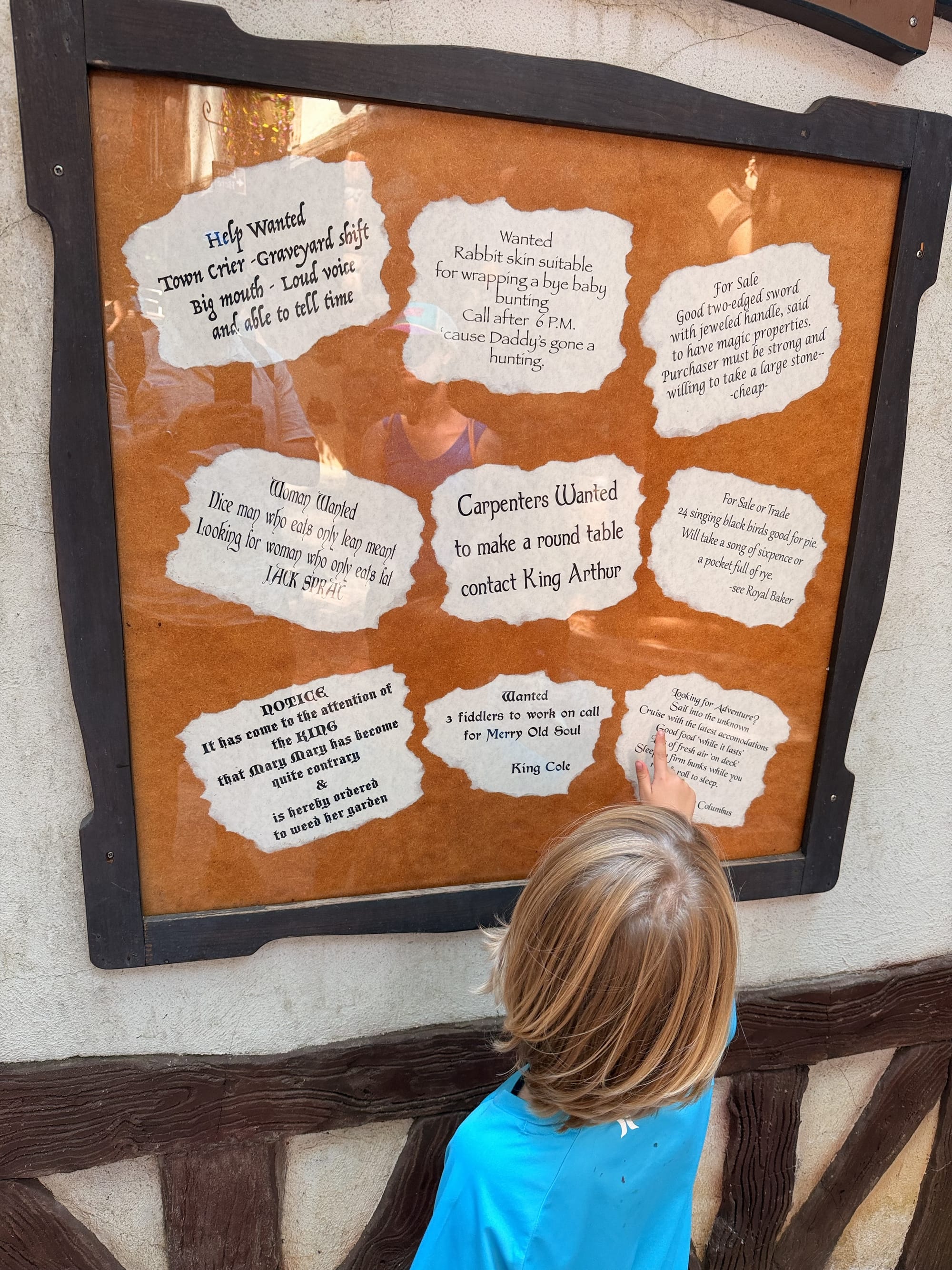
I wondered whether Disney had ever objected. I could not find a lawsuit or a public cease-and-desist letter. That does not mean nothing ever happened. It only means that if an attorney once wrote to the Tofte family about the legal status of a dwarf, the letter has not become part of the public record.
The park itself offers a small museum about its origins. Museum may be too grand a word. There are photographs and documents arranged in a few rooms, showing Roger Tofte building figures and structures on the hillside, looking less like the founder of an institution than a man who had not yet realized how much work he had created for himself. Having grossly underestimated more than one home improvement project, I found that part immediately believable.
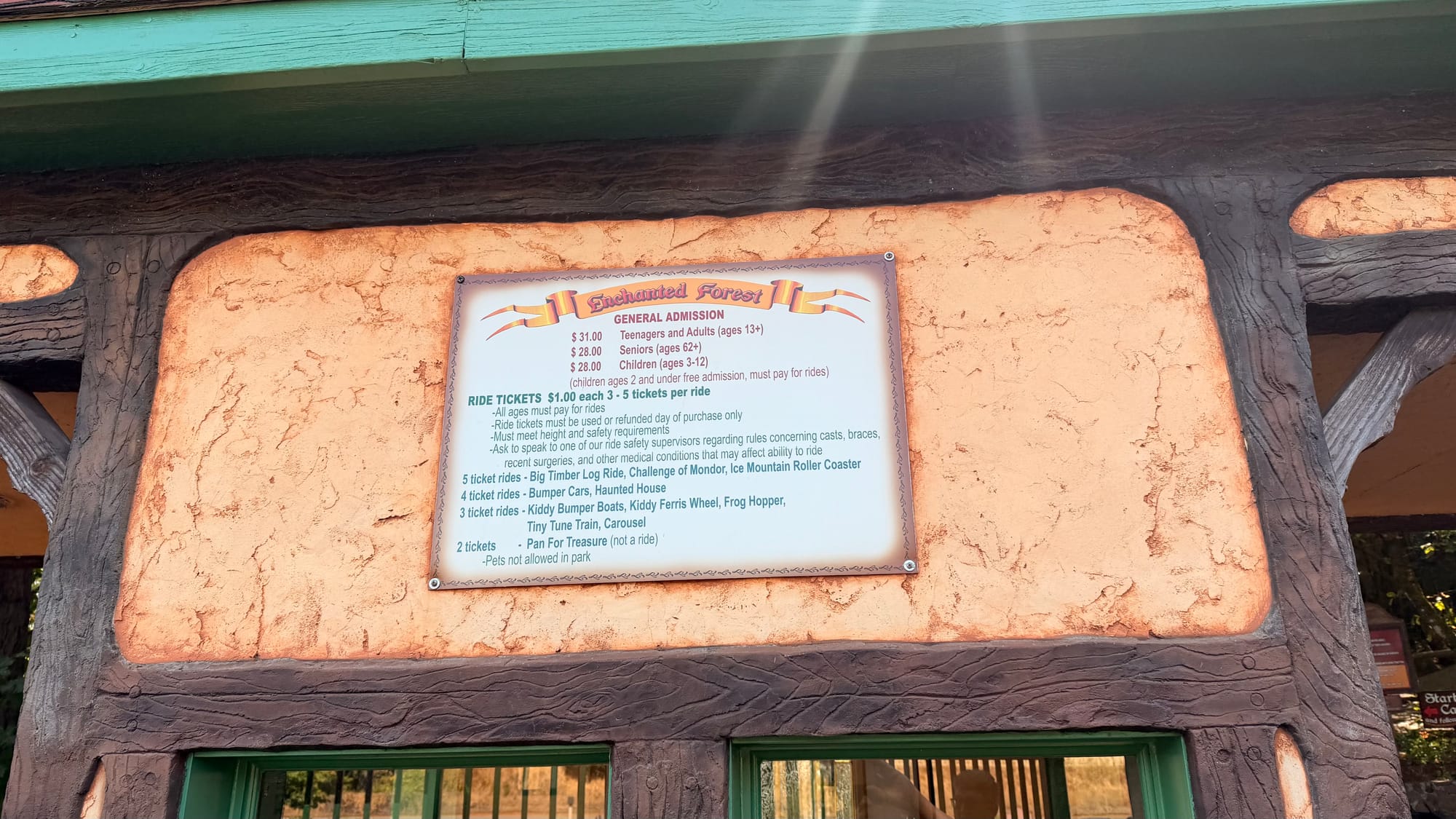
In this museum, it is the family telling the family story, and everyone in the photographs appears to know where this is headed.
I went home and started looking through old newspaper stories to dig up some details, because I was curious. Tofte worked as a draftsman for the Oregon State Highway Department. He had wanted to become an illustrator, but illustration was not supporting a young family, so he took the state job and kept the other part of his brain occupied however he could. He repaired watches on the side. In 1964, he and his wife, Mavis, bought the wooded hillside for $4,000.
Tofte was a licensed watchmaker, and the money helped finance the park. The purchase of the hill was not easy on the family, and Mavis said they went without.
Roger thought construction would take two years. It took seven.
His coworkers at the Highway Department called the property "Idiot Hill" and the "Funny Farm." Roger later admitted that the teasing got to him. At some point he began to wonder whether he should keep going. Susan, his oldest daughter, remembered confronting the men as a little girl and telling them that her father was not crazy.
It is easy to make persistence look admirable after a thing succeeds. Before it succeeds, persistence can be difficult to distinguish from irresponsibility. A man has bought twenty steep acres and spends his evenings carrying cement into the woods. He has four children and a state job. Years pass, and the park is still not open.
There must be a point where a hobby quietly becomes the rest of your life. I imagine it happens somewhere around the time it starts costing more than a drinking problem.
Susan later described her childhood as the park. In a 1972 newspaper story, the children were not merely living near their father's project. Sixteen-year-old Susan worked the register and gift shop. Her brother Ken cleared trails and handled odd jobs. Mary stuffed envelopes. Lori, who was six, wiped tables when she could.
Susan said something in an NPR interview years later that sounded generous. She said that loving someone meant allowing that person the time to fulfill a dream.
I'm married with young children. Around our house, that usually means negotiating trades. Bedtimes, dinner, dishes, Saturday mornings, or whatever else was supposed to happen while someone disappeared to the gym or into the garage.
Roger built the original fairytale figures from rebar, wire mesh, cement and plaster. He had no formal art training and little experience working with cement, which did not prevent him from making permanent objects out of it. He would buy a sack after work and build another part. His grandson Derek described the process as one bag of cement at a time, then called the whole idea insane.
Derek works at the park now. He also described arguing with his grandfather over stonework. Roger continued using a cement trough that was older than Derek and could spend forever positioning one stone because it had to face a particular way. No explanation was necessary or apparently available. The stone had to be that way, and everyone else had to deal with it.
Visionary is what people call a stubborn person once the evidence has accumulated in his favor.
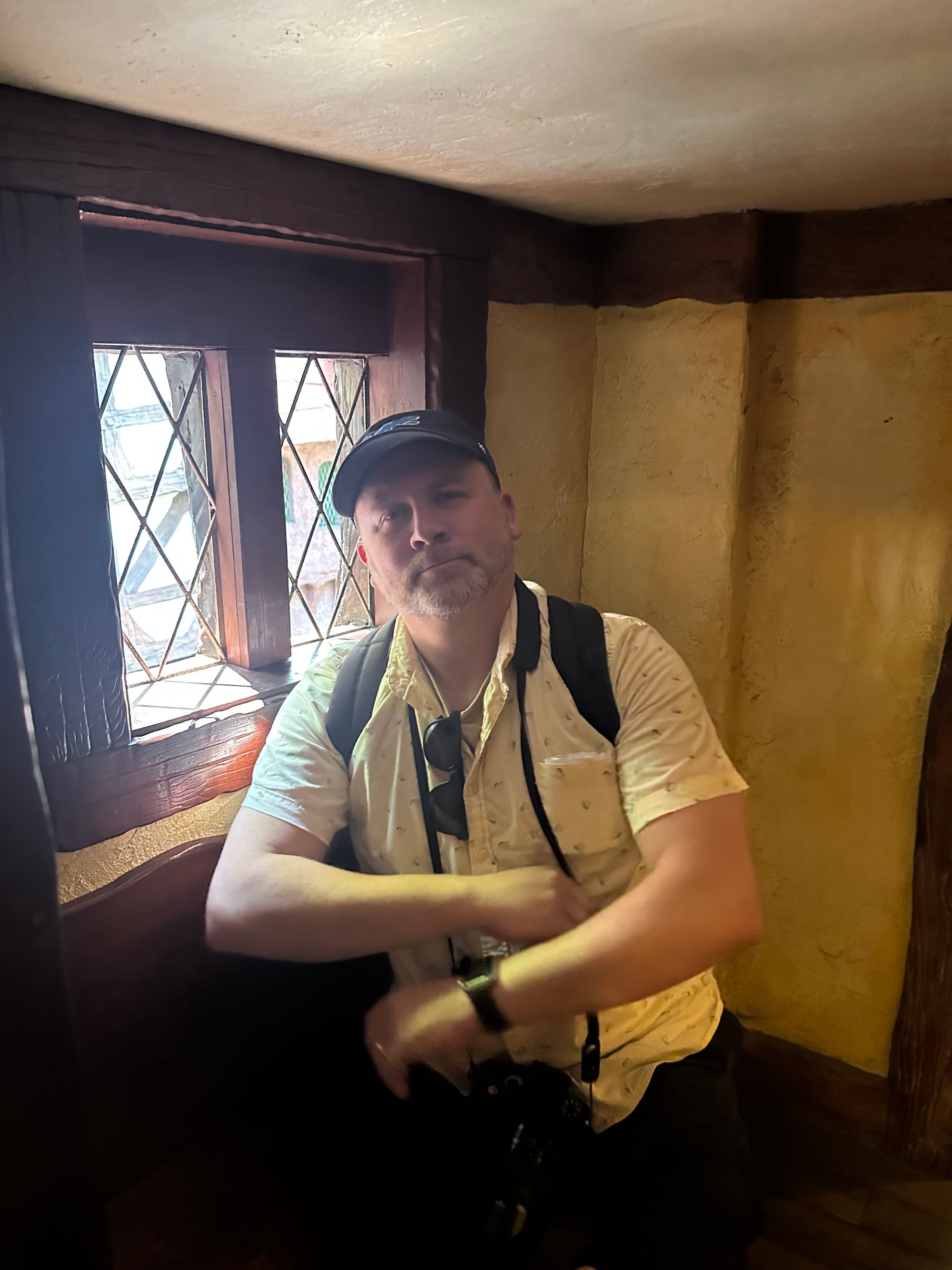
On August 8, 1971, after seven years of construction, Roger wrote OPEN on a piece of butcher paper and attached it to the fence. Seventy-five people came through. He was still running around installing lightbulbs in the Seven Dwarfs' mine while the park was open.
That night the family dumped the money onto a bed. The children threw bills in the air. They thought they had made it.
The following Sunday, around a thousand people came.
I do not know when the point of no return arrived. Perhaps it was that second Sunday. Perhaps it was two years later, when the park was earning enough for Roger to leave the Highway Department. By then, Idiot Hill had customers. Once an obsession has paying customers, people use different words for it.
The park never really reached a final form. The 1972 newspaper article, written less than a year after opening, already described it as unfinished and suggested it might remain that way. Roger said the family kept coming up with ideas. He planned a haunted house, an old-fashioned train and a replica of Gulliver. Some ideas were built; others presumably remained ideas.
That may be part of why the park feels unlike a contemporary attraction. It does not appear to have opened with a complete theory of itself. The English village and Tofteville do not need to reconcile. A castle can be near a mining town because both were things Roger wanted to make. Somewhere along the way the family added rides, then larger rides, then performances, food service and the other machinery required to keep people on a hillside for most of a day.
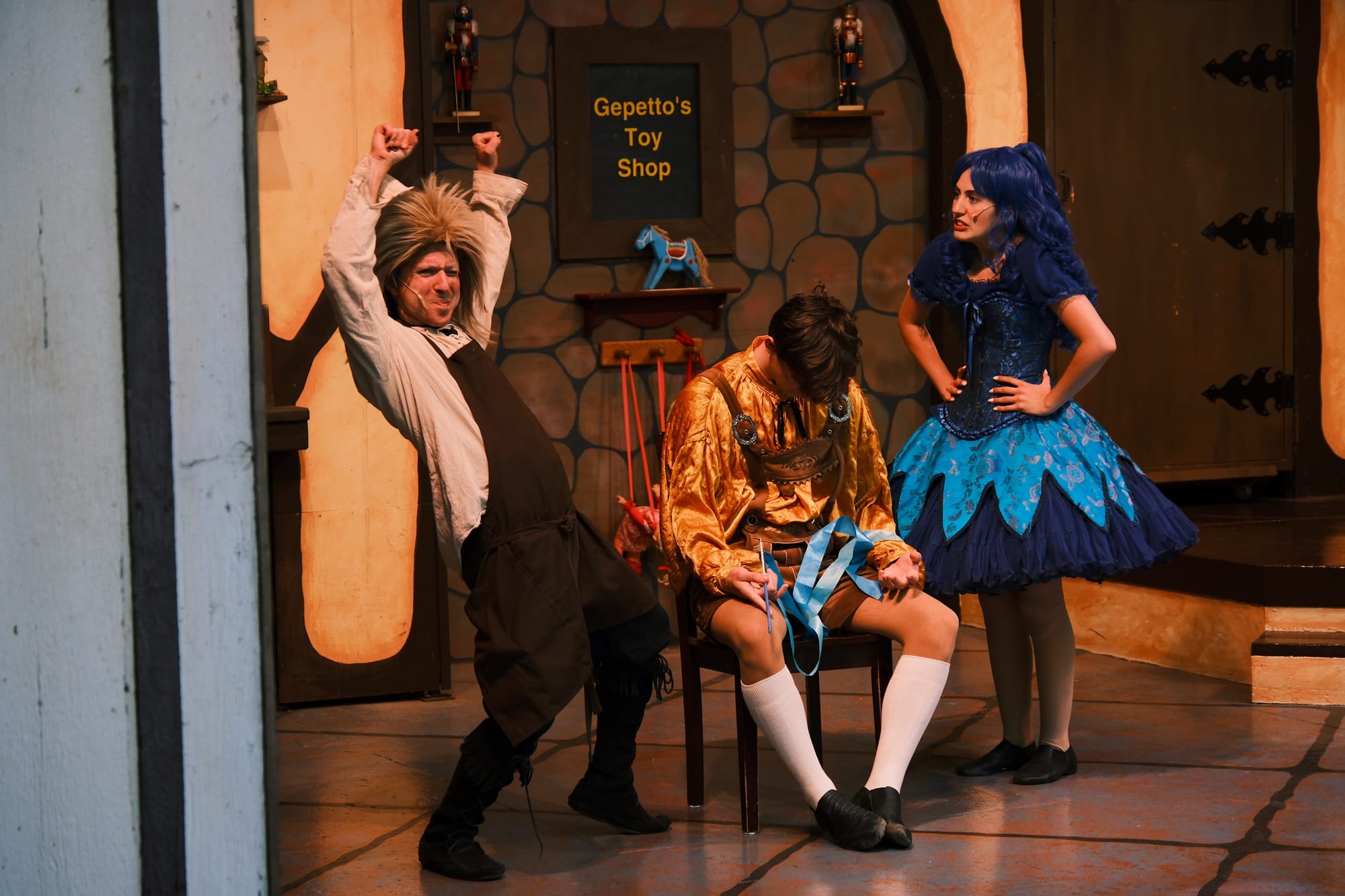
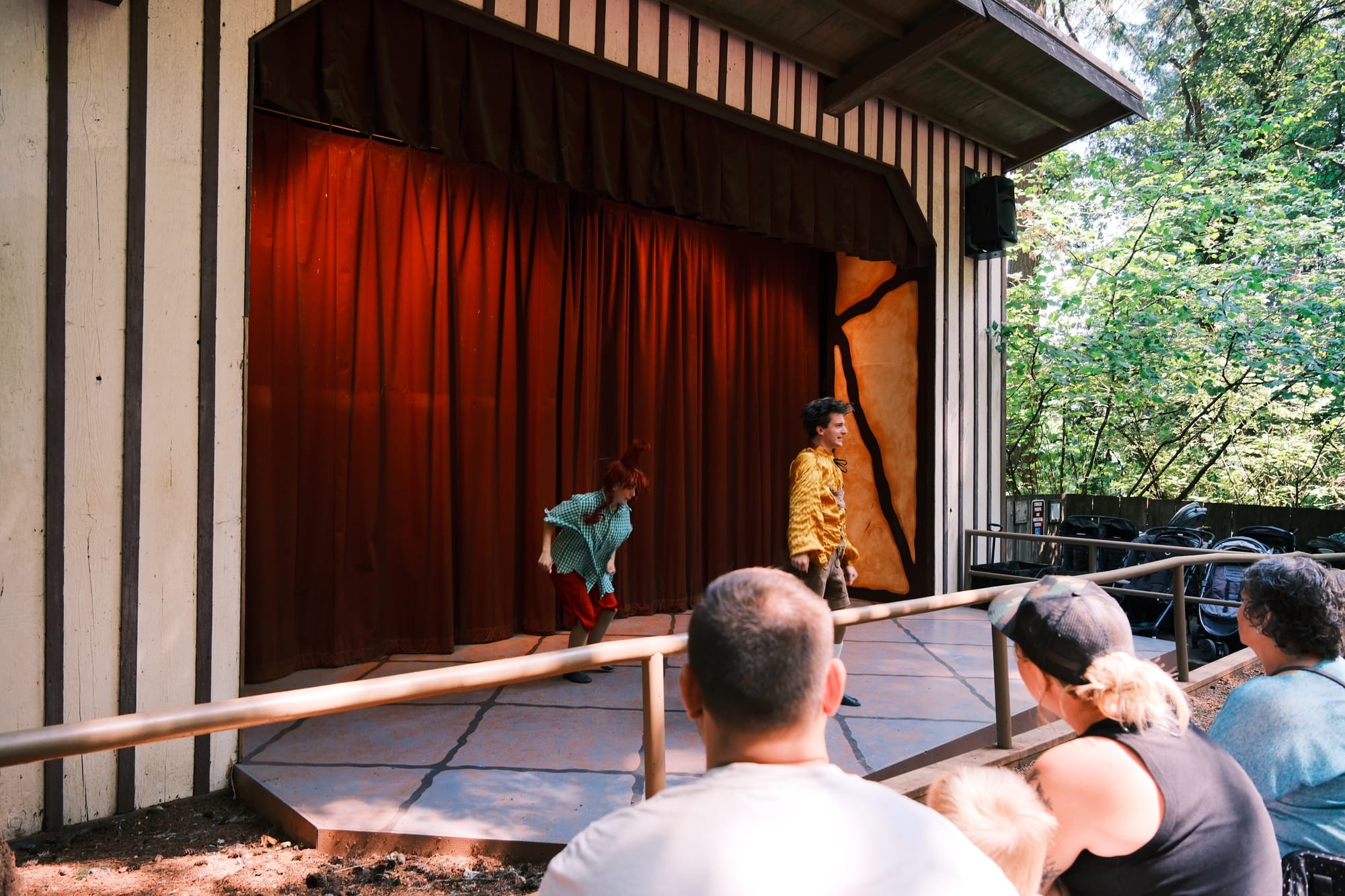
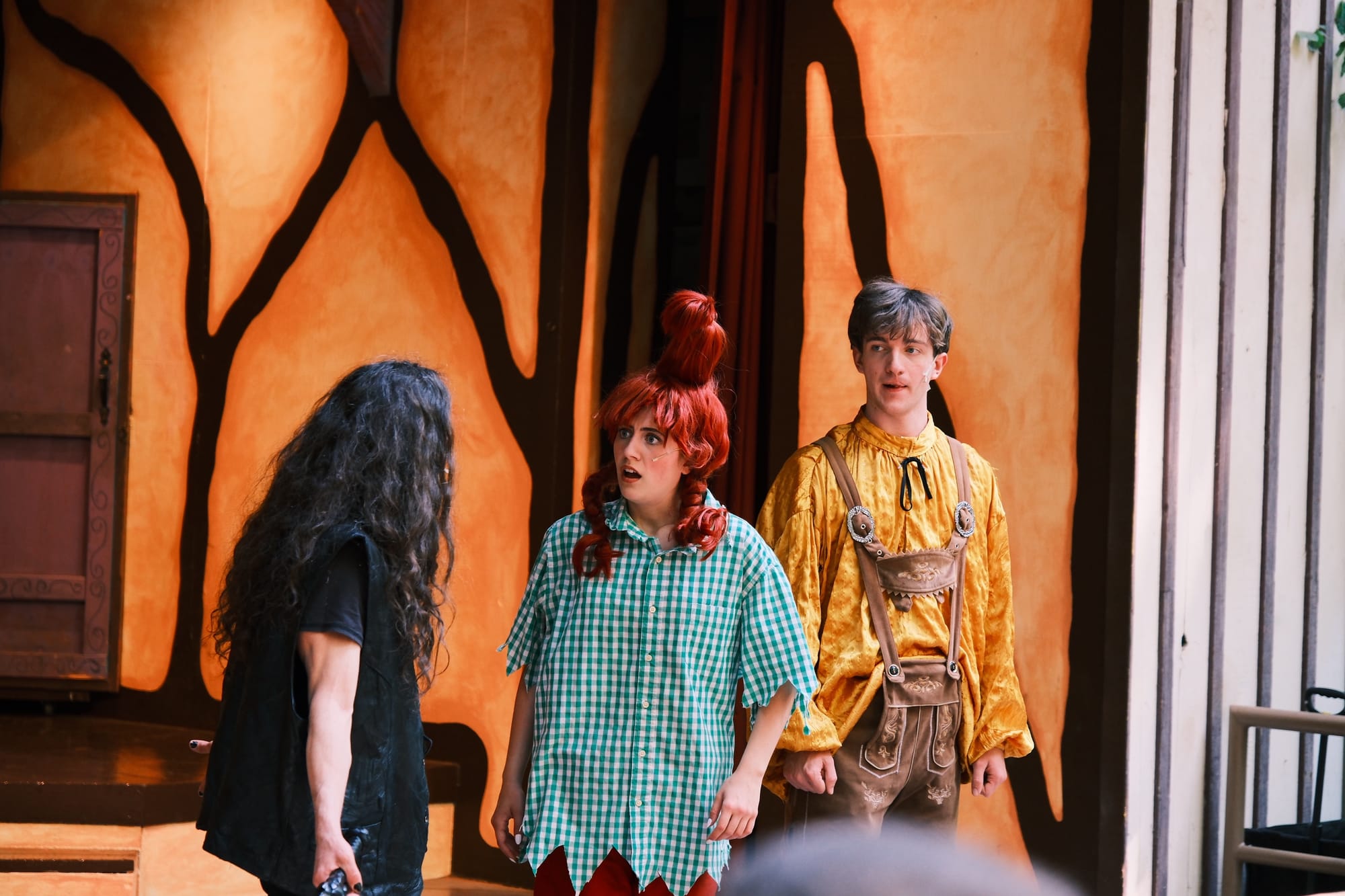
The current stage production was Pinocchio. Susan wrote it.
There was something strange about learning that afterward. My children had watched a play written by the daughter who once stood up to her father's coworkers and told them he was not crazy. She had gone from defending the imaginary park to writing scripts inside the real one. The actors made jokes about their wages and their abandoned dreams, and the adults laughed harder than the children. The performance was much better than it needed to be.
I had assumed the park's theatrical self-awareness came from employees making peace with where they worked. It turns out the family had written it into the show.
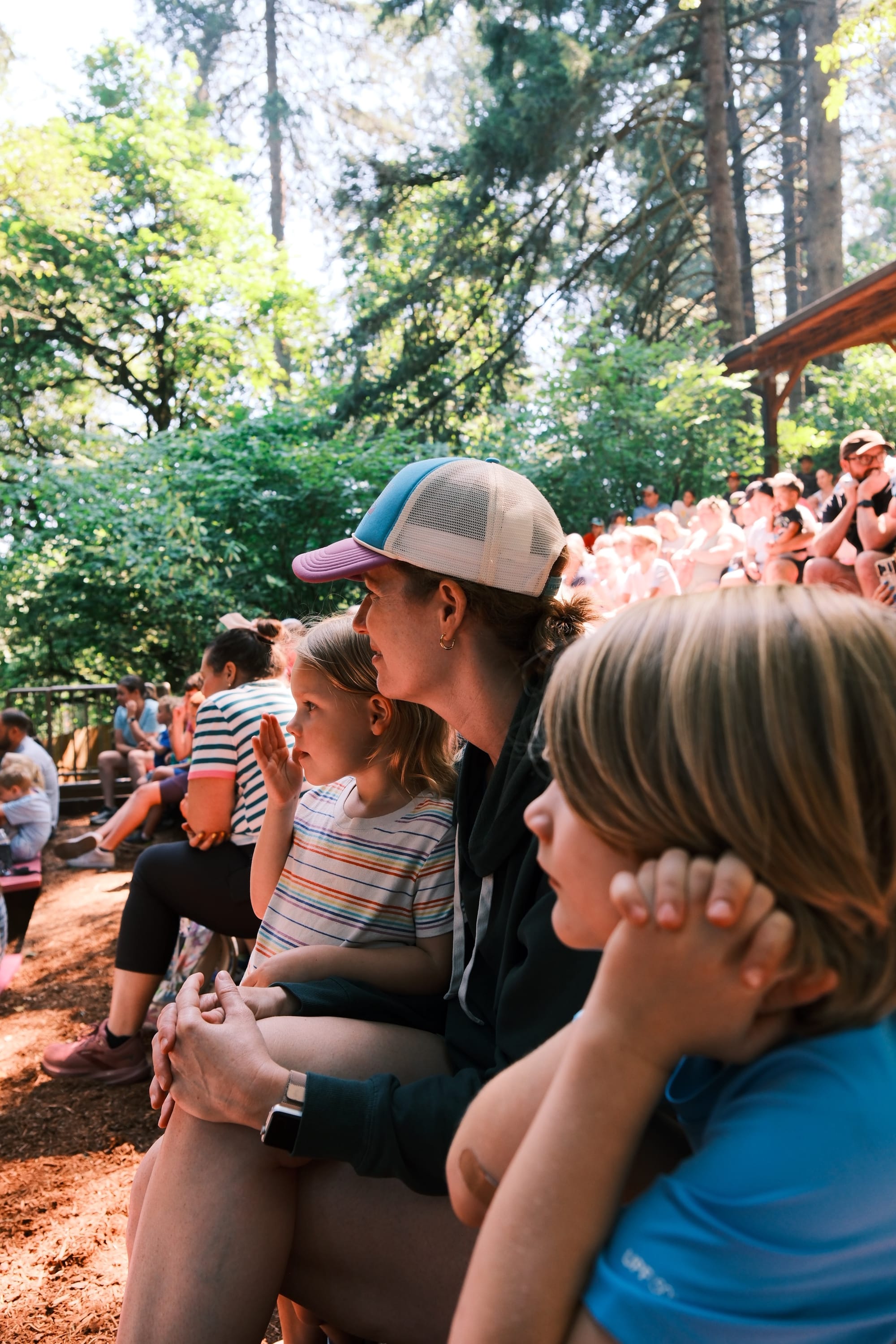
Roger had his own ideas about what children needed. He thought children were too confined and that the park gave them room to roam. Some of it was meant to be scary, and he considered that good for them.
Watching my daughter, I could see what he meant. She did not require the park to be convincing. She required it to contain another place she could enter. Children seem to accept that a doorway is enough. Adults want to know whether the room beyond it is authentic, what the building is supposed to represent, whether the upper story is occupied and how the project was financed.
Some of what makes the place work is obvious. The cars remain outside. Paths narrow and turn, trees conceal whatever is fifty feet ahead, and buildings press close enough together that a modest number of visitors can feel like a crowd. The hillside creates transitions almost by accident, although very little about hauling cement up a hillside was accidental for the person doing it.
Planning school taught me to take street width, enclosure and the placement of buildings seriously, and I still do.
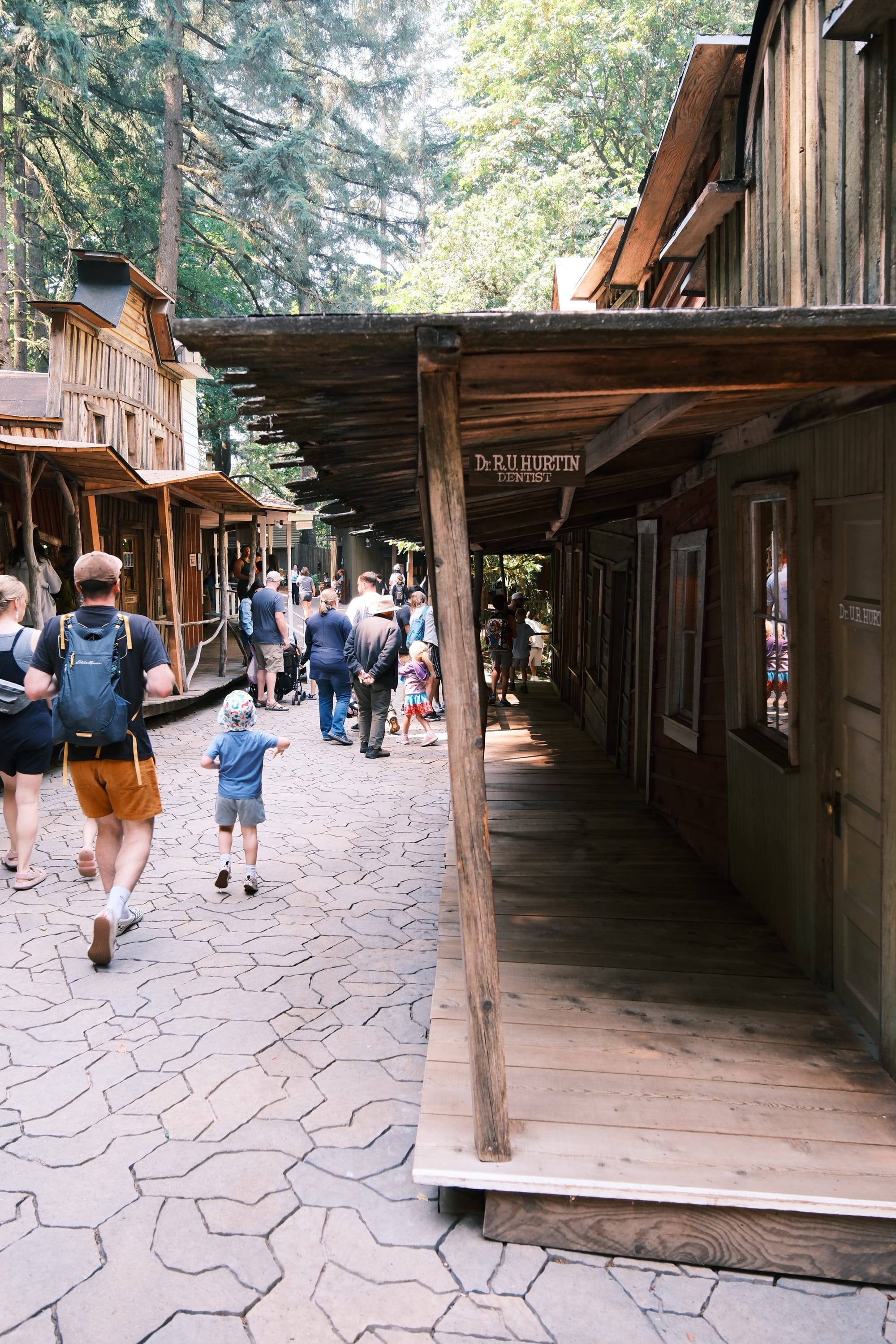
Then you reach the Old West town and notice that much of it is scenery, and that the boardwalks are violently non-accessible. Nobody lives above the saloon, and the upper windows suggest activity that isn't happening behind them. The street below, meanwhile, is full of actual people. The pizza is real, though, even if it arrived a couple hundred years ahead of schedule.
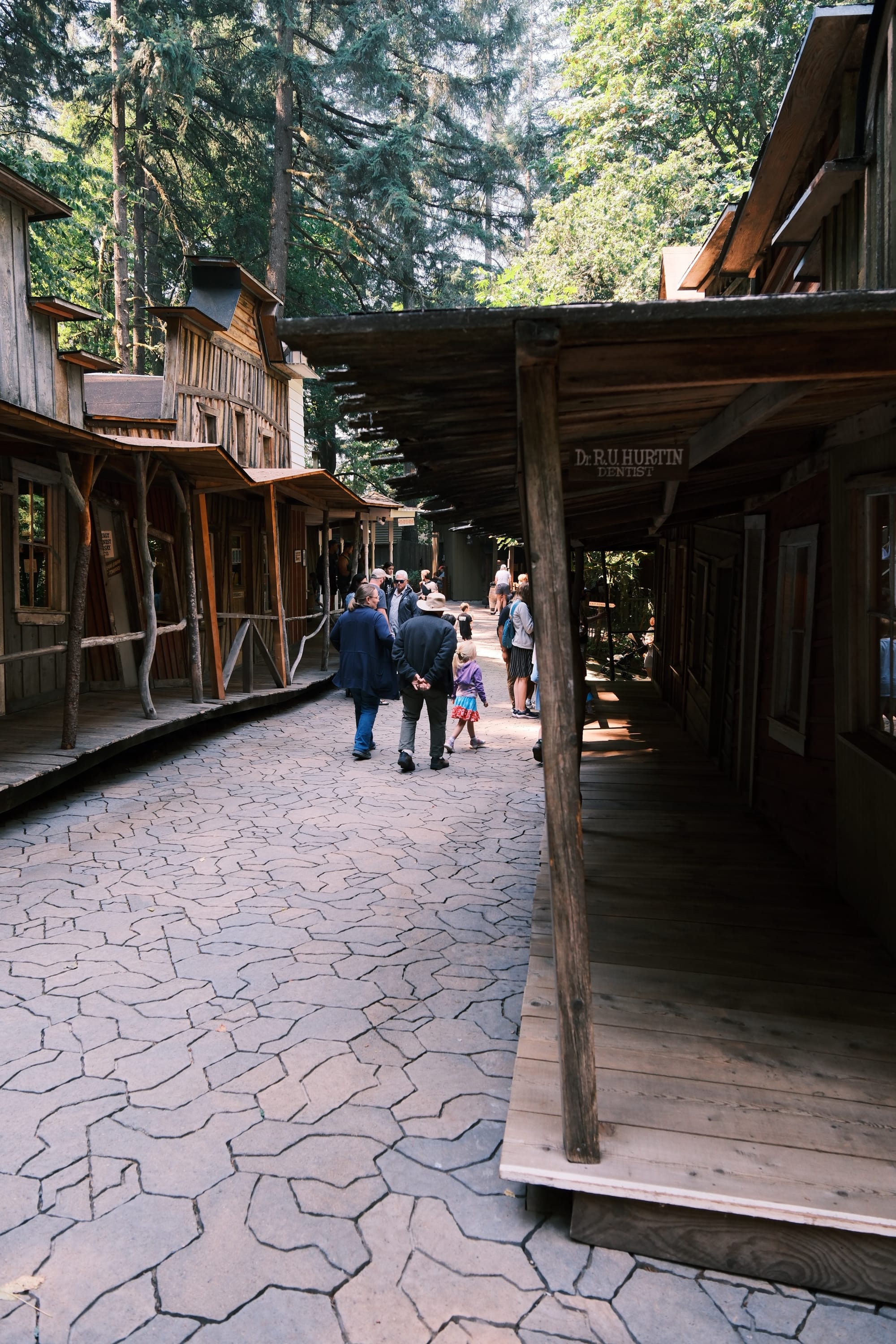
I have seen the reverse condition often enough: real mixed-use buildings with technically correct storefronts that remain empty, their windows papered over beneath several floors of occupied apartments. The form is there. The reason to be there is not.
At Enchanted Forest, the storefronts are fake and the activity is real.
Of course, this is an unfair comparison. Everyone at Enchanted Forest has paid to enter and arrives with roughly the same purpose. The park programs the day for them. There are rides, performances and small discoveries around the next turn. A city street cannot charge admission at the boundary and promise that a puppet will begin speaking at regular intervals.
Still, the distinction bothers me. Planners sometimes talk as though the right physical container will produce the desired social life. Developers have learned the language too. A large building occupies several former parcels, so the façade is divided into sections to suggest several smaller buildings. The brick changes color, the cornice rises and falls, and ground-floor commercial is required whether or not anyone can afford to operate a business there.
I thought about old commercial streets I have watched disappear in Michigan and Oregon, although I did not want Enchanted Forest to become an excuse to write that essay again. The comparison fails in several obvious ways. Roger Tofte owned the whole property. He was not one of thirty independent owners making unrelated decisions over a century. The park is closer to a private shopping center than an organically accumulated town, except that no shopping center developer would tolerate its chronological confusion or the uncertainty of its original business plan.
Maybe ownership is not the useful distinction. Maybe time is. A contemporary project generally has to explain itself before it exists. The program, financing, phasing and expected return are worked through in advance. Enchanted Forest seems to have become legible only after years of building, and perhaps not even then. It had to survive long enough for the explanation to catch up.
The original work may also have occurred outside any permitting system we would recognize today. Later accounts say the early park was built without permits, and Marion County eventually maintained a comprehensive plan for the site to simplify approval of later additions. Roger said directly that he did not believe they could have done it under modern conditions because the red tape would have cost too much.
I would still like to see the file. There must be decades of correspondence about additions, repairs, inspections and changes of use. Somewhere a public employee had to classify the giant shoe. Someone reviewed the haunted house. The rides are inspected, presumably with considerably more rigor than the original concrete tunnels and bridges.
This is not an argument against building codes. Roller coasters need serious inspection, accessibility matters, and old attractions do not become safe merely because people are fond of them.
The more difficult question is what happens when every individual requirement is reasonable and the cumulative process leaves no room for anything unreasonable enough to become Enchanted Forest.
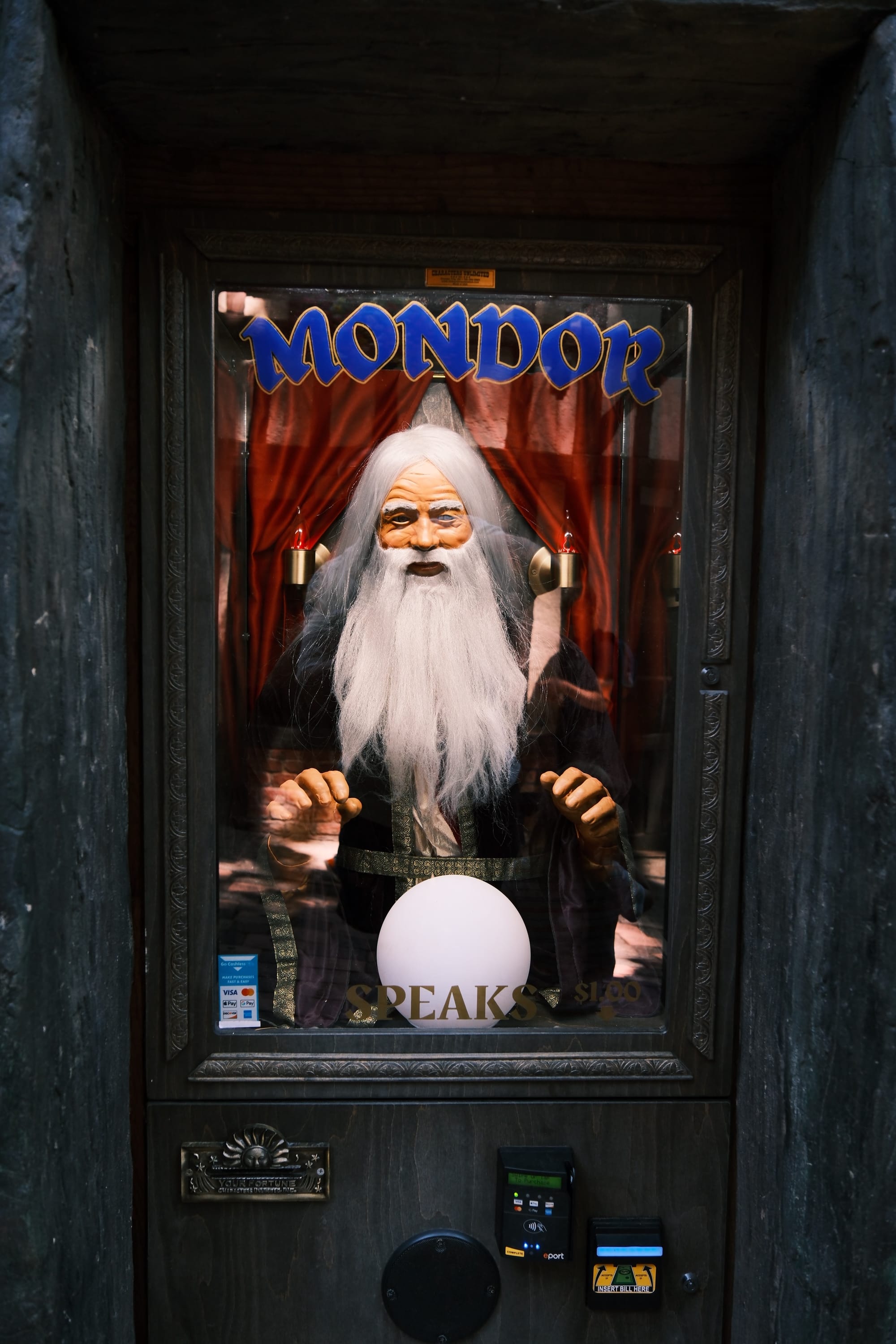
Roger died in February of this year at ninety-six. Three generations of the family now work at the park. He kept planning attractions, making repairs and riding his moped around the property almost until the end. During COVID, the park raised hundreds of thousands of dollars through crowdfunding to survive. People gave money to preserve a place where fake medieval heads speak from windows and a rebuilt Humpty Dumpty sits on a wall because the previous Humpty Dumpty had, in fact, suffered a great fall.
Two visitors knocked him down while trying to take a photograph. Roger was eighty-four and spent fifty days building another one.
That may be the clearest description of the place. A figure made from rebar, wire mesh, cement and plaster breaks after decades in the weather, and the elderly man who built the first one spends fifty days making another.
By the end of our visit, the kids were tired and we still had two tickets they bought back on the way out. I had spent part of the day taking pictures, part of it counting heads, still more of it staring up at the trees, an unreasonable amount of it thinking about drainage, and eventually wondering how any of this appeared in the building code. My daughter had not asked who financed the park or whether Roger's devotion had been fair to his family. She had ridden what she could ride and entered what she could enter.
We walked back down the hill toward the parking lot, where we realized just how hot and smoky the day had become.
Roger Tofte had imagined children doing that before I was born. At the time, the hill had no castle, no Western town and no family history attached to it. His coworkers saw him carrying cement into the woods and named the place accordingly.
They were not entirely wrong.