Starter House
On the house I grew up in, the house we live in now, and why we're staying put, much like everyone else.
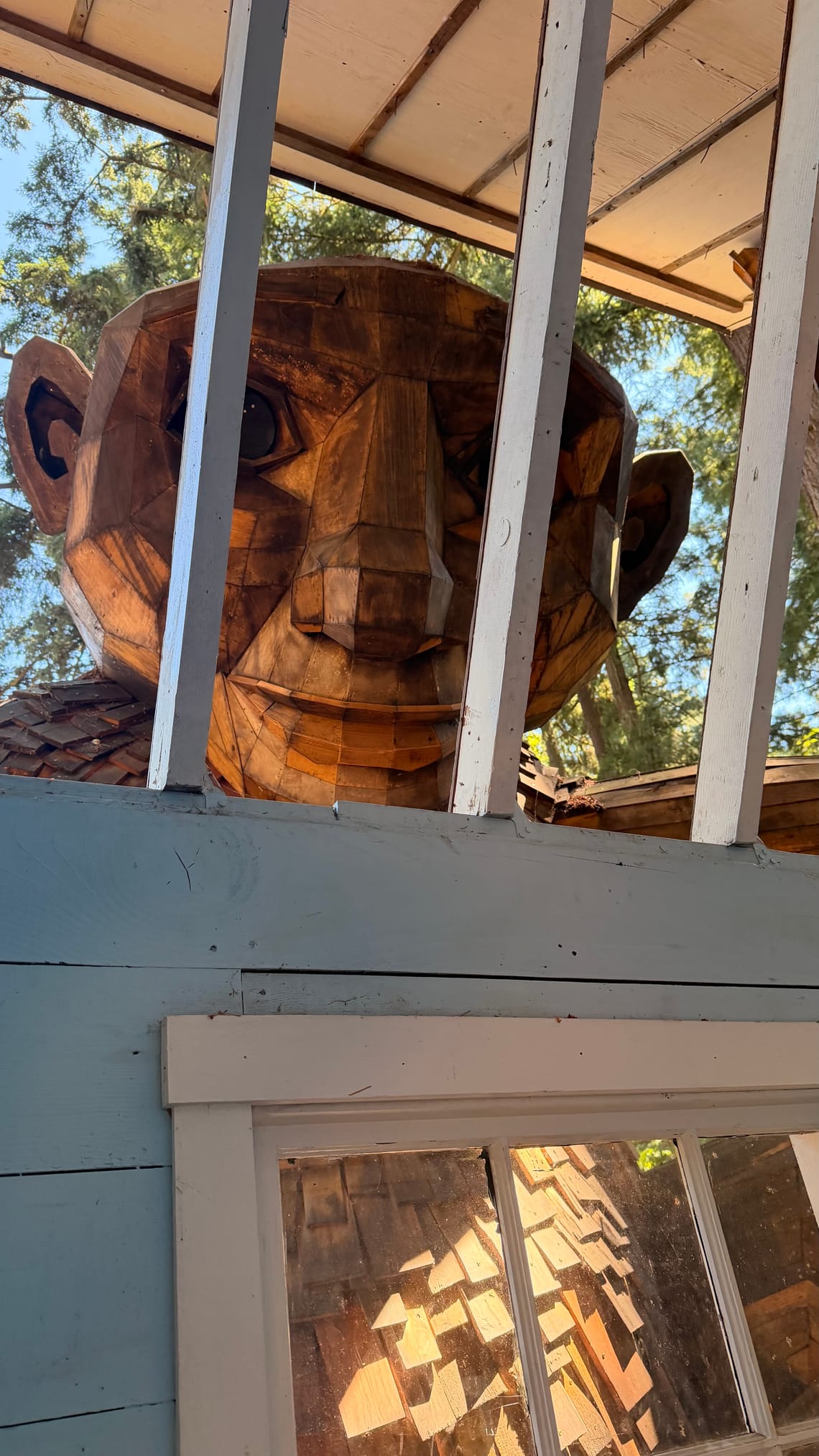
Last year we got a quote to redo our siding with Hardie plank. Forty-eight thousand dollars, on a very small house. My public response was four letters long.
This year we did half the house instead, plus two new window openings. The installers broke an outdoor light they don't make anymore, and I'm still salty about it. One of the new windows is in the dining room, which used to be a cave. I'd like to build a bench seat under it. I'd like to replace the fence. Someday.
The kids are getting bigger and the house isn't. Every few months I end up on Zillow, looking at houses out here with another 500 or 750 square feet. A second living room. An office with a door. Enough room for four people to get away from each other once in a while. I can look at a listing and see a better version of us living there, rested, with somewhere to put the vacuum. That's what listings are for.
⁂
The first house I remember was 936 square feet. Three bedrooms and one bathroom on Burrows Street, on the edge of Saginaw, and at one point there were eight of us in it. My grandmother. Three of her kids who were still at home. My mom, who was a teenager when she had me. Me, and later my two brothers. Was it eight? It seemed like more.
My grandfather left when my mom was a kid. My grandmother had worked in a factory for a while and grew up in a one-room shack with a dirt floor. That was the story, anyway. She charred tortillas right on the gas burner. She danced to Mrs. Robinson and sang along in her old person voice. When somebody was at work somebody else was home, and when money ran short there was usually a pair of hands around to stand in for whatever we couldn't buy.
We bought our clothes at the Kmart on State Street and ate its nasty submarine sandwiches sometimes. My Cub Scout uniform came from Sears in a shade that wasn't quite right. My brother and I had two book bags between us. One was plain. The other was a strange plaid thing, and we fought over whose turn it was to carry the plain one. I have no idea why I remember being self-conscious of my backpack at such a young age.
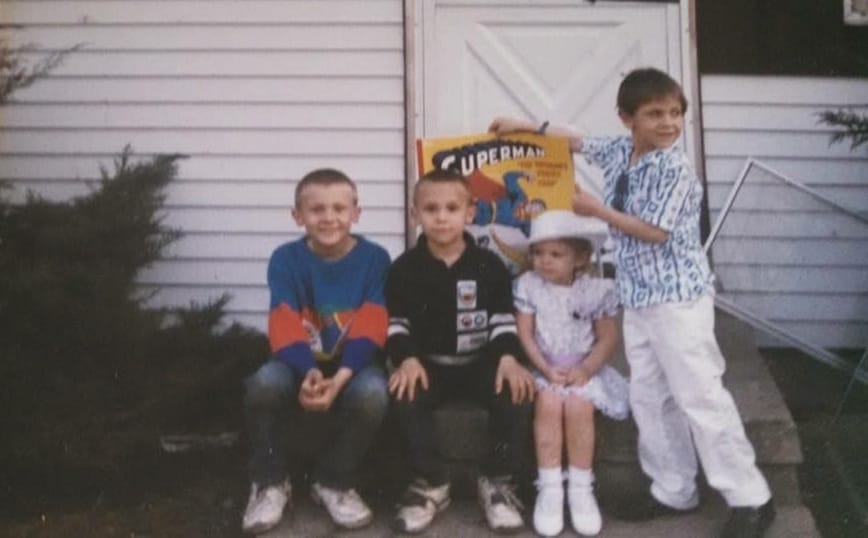
We went to the upper middle-class elementary school and lived in the smallest, poorest corner of the district. Six houses down, kids went to a less desirable city school. Their families were no different from ours. A friend of mine lived on the other side of the line but used his grandparents' address on ours. I hear he's a lawyer now.
The parents of one of my mom's friends told my mom never to go down Burrows Street because that's where the bums lived. That was before they knew where she lived. Those families had more room and more privacy and fewer shoes by the door, and for a long time I was embarrassed by ours. I'm not anymore, mostly.
⁂
I bought my house in Oregon in July 2016, a short sale in pre-foreclosure. It's a 1,200-square-foot snout house, which means the garage pushes out toward the street and the front door hides somewhere behind it. Planners have been sneering at snout houses for thirty years.
I am a planner.
It had been a rental, and it was not the house I thought I wanted. The yard was full of tree limbs and old toys and junk the renters left behind. That first fall I drank some beer and burned branches under the guise of a recreational fire. Nobody called the fire department.
In 2018 I spent months painting it midnight blue in the heat and told everybody that I was officially calling it for the next summer. No maintenance, more trips. Then came new gutters, carpet, toilets, windows, more paint, and a kitchen soffit I finally opened up seven years after we moved in. There were two leaks inside. I told everybody to check back in 2026 to see if I'd patched it.
It's 2026.
⁂
After Burrows Street we moved to Midland once relationships started to break down under the strain of eight people sharing one bathroom. Nine, actually. My mom was dating the man who was to become my stepfather, and he was staying over too often. So we moved into a two-bedroom apartment, and my mom raised the three of us alone for a couple of years. Our friends lived in big, gorgeous houses that made me sick with envy on the walk home. Nobody was home when we got there. Sometimes we forgot the key.
Some of what I feel on Zillow is that walk home. I'd like to think I outgrew it. Mostly.
Later my mom remarried and we ended up at a rural school. My stepdad was an operator at the big power plant in Midland. It had almost been a nuclear plant. They were eighty-five percent done when they gave up on it in 1984, and a few years later it was burning natural gas. Five years later I was on my own.
I lived in Michigan for thirty-four years, and the state was sliding the whole time. One of my uncles quit teaching because GM paid better, back when the plants were still hiring. By the time I finished college, straight into the Great Recession, I was back in a kitchen making less than seven dollars an hour.
Planning school taught me that Portland was the promised land, and eventually I moved out here to see for myself. It's lovely. Things aren't always what they look like from Michigan. We live in the western suburbs now, near Beaverton, which people in the city love to rag on. There's a MAX station I can walk to, a food cart pod with excellent birria, a brewery where our favorite Indian restaurant used to be, and as of this summer an In-N-Out I did not need.
⁂
When I'm done on Zillow, I do the math. We have a 2.875 percent mortgage. A $700,000 house with $500,000 borrowed, at the 7.28 percent average Freddie Mac reported the week before Thanksgiving, comes to about $3,400 a month in principal and interest. Property taxes on a house like that run around $10,000 a year now, which brings it past $4,200. Then insurance, and heating the thing, and siding on a house that size.
Three years ago I wrote that we felt trapped in our house. Two incomes, two graduate degrees, above-average household income, and still pinched. Daycare for two kids cost twice the mortgage. One kid is more than in-state tuition at most Big 10 schools. A neighbor of ours with one kid once looked me dead in the eye and asked how we could afford daycare for two. I asked him how he could afford a landscaper every week.
Economists call it lock-in. People still move when they have to, for the new job or the divorce. What they've stopped doing is trading up for an extra bedroom. Somewhere in the last three years I became one of those people on purpose.
I think about an ordinary Wednesday in an imaginary bigger house. We'd still rush through the same mornings, drive to the same jobs and schools and soccer fields, make dinner, clean the kitchen, and look at our phones on the couch longer than we should. Most of it would be the same life with more drywall around it. The office would become the room where the mail goes. The extra bathroom would be one more bathroom to clean. The payment would stay.
⁂
I do our yard and much of the maintenance myself. It rarely looks great. Maybe it's the Midwest in me, but I'm surprised by how many people hire out the work. I sit at a desk all day, and it feels good to do something with my hands. My wife works too, and between the two jobs and the two kids, most of what gets done around here gets done an hour at a time, after bedtime. Some weekends nothing gets done at all. I once wrote that "get things done around the house or go on an adventure" is perpetually the Sunday question. A bigger mortgage would take away both.
When I drive through the older tracts out here, I try not to judge the paint. A lot of what went up in the 80s was boom-time housing wrapped in T1-11, with windowless walls facing the neighbors. On the plus side, people on our block are visibly investing in their small houses. Sometimes I think about what happens to these neighborhoods if Intel ever leaves. Having grown up where I did, I have a hard time looking at a place with good jobs and assuming they'll always be there.
I also know what forty-eight thousand dollars is. Behind a warped panel there might be a man who shouldn't be on a ladder anymore, or two parents working fifty hours a week, or somebody sick, or a family who chose groceries and daycare over siding that could probably make it one more winter.
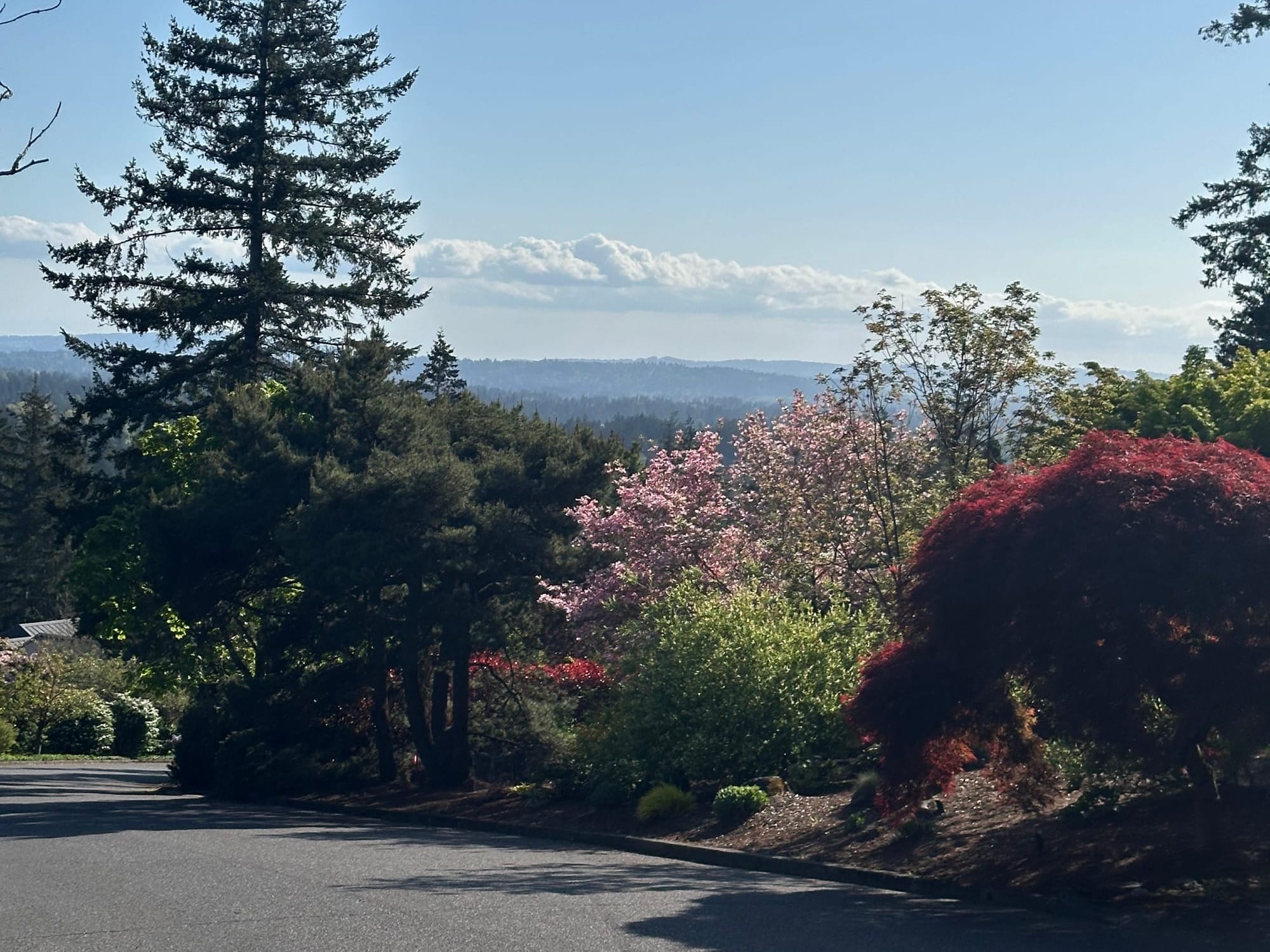
I still like driving through Bridlemile and the Southwest Hills, where the trees are enormous and the houses are older than the tired cookie cutter ones out by us and don't look it. Somebody comes on Thursdays to mow, an arborist deals with the trees, and the siding gets replaced before anyone sees it warp. Fifty years of mature landscaping and four Japanese maples per grandkid.
⁂
A while back I drew up plans in CAD to push out our kitchen and turn the garage into a family room. A planner taking his own advice. The code is fine with it.
Someday.
There's a man two doors down I've lived near for years and seen maybe three times, usually bending down to get a DoorDash bag off his porch. I wave but I still don't know his name. Last year I hosted a potluck at the park. I've been trying to find more community here. It was a good turnout.
Three summers ago the family renting the townhouse behind us moved to Texas because they couldn't afford to buy here. Before they left, their five-year-old climbed the fence and told my son he wished they could have our house when we were done with it.
⁂
Our youngest starts kindergarten next year. Maybe we'll move and maybe we won't. I've been watching the trees in our neighborhood grow for ten years. At first you don't notice. Then one day you do, and after that you feel them missing every time you drive through something new.
It's late November. The orb weavers had the yard again this fall, and now they're gone. I'll be out there this weekend anyway, looking at the fence.
The house on Burrows Street sold in 2013 for thirty-five thousand dollars. Somebody lives there now. I hope there are a lot of them.
Sources
Loading Bluesky discussion…